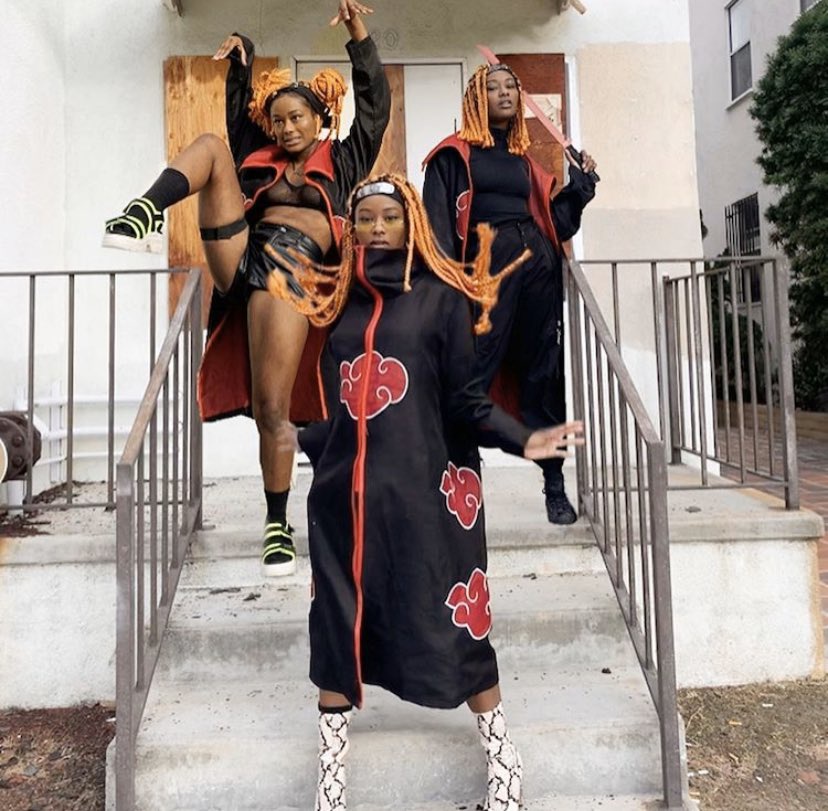
AND WE LOVED EVERY MOMENT
we stan Samurai Jack in these PARTS
I wholeheartedly blew peoples ears out ranting and raving about how AMAZING Samurai Jack is and I will DIE on this hill @storymodebae
{
    "type": "entry",
    "published": "2020-01-31T07:03:50+00:00",
    "url": "https://twitter.com/jackyalcine/status/1223139812783185920",
    "quotation-of": "https://twitter.com/SteamWemakeup/status/1223135743255539713",
    "content": {
        "text": "AND WE LOVED EVERY MOMENT\n\nwe stan Samurai Jack in these PARTS"
    },
    "author": {
        "type": "card",
        "name": "jacky is confused about flew and flown",
        "url": "https://twitter.com/jackyalcine",
        "photo": "https://pbs.twimg.com/profile_images/1217457758863286273/jOe5WIo4.jpg"
    },
    "post-type": "note",
    "refs": {
        "https://twitter.com/SteamWemakeup/status/1223135743255539713": {
            "type": "entry",
            "published": "2020-01-31T06:47:40+00:00",
            "url": "https://twitter.com/SteamWemakeup/status/1223135743255539713",
            "video": [
                "https://video.twimg.com/tweet_video/EPlzeL3U4AAAm3Z.mp4"
            ],
            "content": {
                "text": "I wholeheartedly blew peoples ears out ranting and raving about how AMAZING Samurai Jack is and I will DIE on this hill @storymodebae",
                "html": "I wholeheartedly blew peoples ears out ranting and raving about how AMAZING Samurai Jack is and I will DIE on this hill <a href=\"https://twitter.com/storymodebae\">@storymodebae</a>"
            },
            "author": {
                "type": "card",
                "name": "peppermint chai\u2615\ufe0f",
                "url": "https://twitter.com/SteamWemakeup",
                "photo": "https://pbs.twimg.com/profile_images/1215514660994199553/bIDijXvL.jpg"
            },
            "post-type": "video"
        }
    },
    "_id": "8454395",
    "_source": "2773"
}

{
"type": "entry",
"published": "2020-01-30T22:35:51-08:00",
"url": "https://boffosocko.com/2020/01/30/manual-backfeed-in-the-blogosphere/",
"category": [
"indieweb",
"wordpress",
"backfeed",
"blogosphere-revival",
"building-blocks",
"comment-posts",
"fragments",
"manual-until-it-hurts",
"manual-webmentions",
"microformats",
"posse",
"refbacks",
"reply-post",
"small-pieces-loosely-joined",
"syndication",
"webmention"
],
"name": "Manual Backfeed in the Blogosphere",
"content": {
"text": "Forcing webmentions for conversations on websites that don\u2019t support Webmention\nWithin the IndieWeb community there is a process called backfeed which is the process of syndicating\u00a0interactions on your syndicated (POSSE) copies back\u00a0(AKA\u00a0reverse syndicating) to your original posts. As it\u2019s commonly practiced, often with the ever helpful Brid.gy service, it is almost exclusively done with social media silos like Twitter, Instagram, Flickr, Github, and Mastodon. This is what allows replies to my content that I\u2019ve syndicated to Twitter, for example, to come back and live here on my website.\nWhy not practice this with other personal websites? This may become increasingly important in an ever growing and revitalizing blogosphere as people increasingly eschew corporate social sites and their dark patterns of tracking, manipulative algorithmic feeds, and surveillance capitalism. It\u2019s also useful for sites whose owners may not have the inclination, time, effort, energy or expertise to support the requisite technology.\nI\u2019ve done the following general reply pattern using what one might call manual backfeed quite a few times now (and I\u2019m sure a few others likely have too), but I don\u2019t think I\u2019ve seen it documented anywhere as a common IndieWeb practice. As a point of fact, my method outlined below is really only half-manual because I\u2019m cleverly leveraging incoming webmentions to reduce some of the work.\nManually syndicating my replies\nSometimes when using my own website to reply to another that doesn\u2019t support the W3C\u2019s Webmention spec, I\u2019ll manually syndicate (a fancy way of saying cut-and-paste) my response to the website I\u2019m responding to. In these cases I\u2019ll either put the URL of my response into the body of my reply, or in sites like WordPress that ask for my website URL, I\u2019ll use that field instead. Either way, my response appears on their site with my reply URL in it (sometimes I may have to wait for my comment to be moderated if the receiving site does that).\nHere\u2019s the important part: Because my URL appears on the receiving site (sometimes wrapped as a link on either my name or the date/time stamp depending on the site\u2019s user interface choices), I can now use it to force future replies on that site back to my original via webmention! My site will look for a URL pointing back to it to verify an incoming webmention on my site.\nReplies from a site that doesn\u2019t support sending Webmentions\nOnce my comment appears on the receiving site, and anyone responds to it, I can take the URL (with fragment) for those responses, and manually input them into my original post\u2019s URL reply box. This will allow me to manually force a webmention to my post that will show up at minimum as a vanilla mention on my website.\u00a0\n\n(Note, if your site doesn\u2019t have a native box like this for forcing manual webmentions, you might try external tools like Aaron Parecki\u2019s Telegraph or Kevin Mark\u2019s Mention.Tech, which are almost as easy. For those who are more technical, cURL is an option as well.)\nDepending on the microformats mark up of the external site, the mention may or may not have an appropriate portion for the response and/or an avatar/name. I can then massage those on my own site (one of the many benefits of ownership!) so that the appropriate data shows, and I can change the response type from a \u201cmention\u201d to a \u201creply\u201d (or other sub-types as appropriate). Et voil\u00e0, with minimal effort, I\u2019ve got a native looking reply back on my site from a site that does not support Webmention! This is one of the beautiful things of even the smallest building-blocks within the independent web or as a refrain some may wish to sing\u2013\u201csmall pieces, loosely joined\u201d!\nThis method works incredibly well with WordPress websites in particular. In almost all cases the comments on them will have permalink URLs (with fragments) to target the individual pieces, often they\u2019ve got reasonable microformats for specifying the correct h-card details, and, best of all, they have functionality that will send me an email notification when others reply to my portion of the conversation, so I\u2019m actually reminded to force the webmentions manually.\nAn Illustrative Example\nAs an example, I posted on my website that I\u2019d read an article on Matt Maldre\u2019s site along with a short comment. Since Matt (currently) doesn\u2019t support either incoming or outgoing webmentions, I manually cut-and-pasted my reply to the comment section on his post. I did the same thing again later with an additional comment on my site to his (after all, why start a new separate conversation thread when I can send webmentions from my comments section and keep the context?).\nMatt later approved my comments and posted his replies on his own website. Because his site is built on WordPresss, I got email notifications about his replies, and I was able to use the following URLs with the appropriate fragments of his comments in my manual webmention box:\nhttps://www.spudart.org/blog/xeroxing-your-face/#comment-43843\nhttps://www.spudart.org/blog/xeroxing-your-face/#comment-43844\nAfter a quick \u201cmassage\u201d to change them from \u201cmentions\u201d into \u201creplies\u201d and add his gravatar, they now live on my site where I expect them and in just the way I\u2019d expect them to look if he had Webmention support on his website.\nI\u2019ll mention that, all of this could be done in a very manual cut-and-paste manner\u2013even for two sites, neither of which have webmention support.\u00a0 But having support for incoming webmentions on one\u2019s site cuts back significantly on that manual pain.\nFor those who\u2019d like to give it a spin, I\u2019ll also mention that I\u2019ve similarly used the incredibly old refbacks concept in the past as a means of notification from other websites (this can take a while) and then forced manual webmentions to get better data out of them than the refback method allows.\n\n\nSyndicated copies: WordPress icon\n \n <?xml version=\"1.0\" encoding=\"utf-8\">\n\nIndieWebCamp Icon\n Twitter icon\n Mastodon icon",
"html": "<p><span>F</span>orcing webmentions for conversations on websites that don\u2019t support Webmention</p>\n<p>Within the IndieWeb community there is a process called <a href=\"https://indieweb.org/backfeed\">backfeed</a> which is the process of syndicating\u00a0<a title=\"interactions\" href=\"https://indieweb.org/interactions\">interactions</a> on your syndicated (<a title=\"POSSE\" href=\"https://indieweb.org/POSSE\">POSSE</a>) copies <em>back</em>\u00a0(AKA\u00a0reverse syndicating) to your original posts. As it\u2019s commonly practiced, often with the ever helpful <a href=\"https://brid.gy/\">Brid.gy</a> service, it is almost exclusively done with social media <a href=\"https://indieweb.org/silo\">silos</a> like Twitter, Instagram, Flickr, Github, and Mastodon. This is what allows replies to my content that I\u2019ve syndicated to Twitter, for example, to come back and live here on my website.</p>\n<p>Why not practice this with other personal websites? This may become increasingly important in an ever growing and revitalizing blogosphere as people increasingly eschew corporate social sites and their dark patterns of tracking, manipulative algorithmic feeds, and surveillance capitalism. It\u2019s also useful for sites whose owners may not have the inclination, time, effort, energy or expertise to support the requisite technology.</p>\n<p>I\u2019ve done the following general reply pattern using what one might call manual backfeed quite a few times now (and I\u2019m sure a few others likely have too), but I don\u2019t think I\u2019ve seen it documented anywhere as a common IndieWeb practice. As a point of fact, my method outlined below is really only half-manual because I\u2019m cleverly leveraging incoming webmentions to reduce some of the work.</p>\n<h2>Manually syndicating my replies</h2>\n<p>Sometimes when using my own website to reply to another that doesn\u2019t support the <a href=\"https://www.w3.org/TR/webmention/\">W3C\u2019s Webmention spec</a>, I\u2019ll manually syndicate (a fancy way of saying cut-and-paste) my response to the website I\u2019m responding to. In these cases I\u2019ll either put the URL of my response into the body of my reply, or in sites like WordPress that ask for my website URL, I\u2019ll use that field instead. Either way, my response appears on their site with my reply URL in it (sometimes I may have to wait for my comment to be moderated if the receiving site does that).</p>\n<p>Here\u2019s the important part: Because <em>my URL</em> appears on the receiving site (sometimes wrapped as a link on either my name or the date/time stamp depending on the site\u2019s user interface choices), I can now use it to force future replies on that site back to my original via webmention! My site will look for a URL pointing back to it to verify an incoming webmention on my site.</p>\n<h2>Replies from a site that doesn\u2019t support sending Webmentions</h2>\n<p>Once my comment appears on the receiving site, and anyone responds to it, I can take the URL (with fragment) for those responses, and manually input them into my original post\u2019s URL reply box. This will allow me to manually force a webmention to my post that will show up at minimum as a vanilla mention on my website.\u00a0</p>\n<p><img src=\"https://i0.wp.com/boffosocko.com/wp-content/uploads/2020/01/Manual-webmention-reply-box-and-button.png?resize=660%2C222&ssl=1\" alt=\"The manual webmention box and button that appear on all my posts.\" width=\"660\" height=\"222\" /></p>\n<img src=\"https://i0.wp.com/boffosocko.com/wp-content/uploads/2020/01/Manual-webmention-reply-box-and-button.png?resize=660%2C222&ssl=1\" alt=\"The manual webmention box and button that appear on all my posts.\" width=\"660\" height=\"222\" />\n<p>(Note, if your site doesn\u2019t have a native box like this for forcing manual webmentions, you might try external tools like Aaron Parecki\u2019s <a href=\"https://telegraph.p3k.io/send-a-webmention\">Telegraph</a> or Kevin Mark\u2019s <a href=\"http://mention-tech.appspot.com/\">Mention.Tech</a>, which are almost as easy. For those who are more technical, <a href=\"https://indieweb.org/Webmention-developer#How_to_send_webmentions_with_cURL\">cURL is an option</a> as well.)</p>\n<p>Depending on the microformats mark up of the external site, the mention may or may not have an appropriate portion for the response and/or an avatar/name. I can then massage those on my own site (one of the many benefits of ownership!) so that the appropriate data shows, and I can change the response type from a \u201cmention\u201d to a \u201creply\u201d (or other <a href=\"https://indieweb.org/posts#Types_of_Posts\">sub-types</a> as appropriate). <em>Et voil\u00e0</em>, with minimal effort, I\u2019ve got a native looking reply back on my site from a site that does not support Webmention! This is one of the beautiful things of even the smallest <a href=\"https://indieweb.org/Category:building-blocks\">building-blocks</a> within the independent web or as a refrain some may wish to sing\u2013\u201csmall pieces, loosely joined\u201d!</p>\n<p>This method works incredibly well with WordPress websites in particular. In almost all cases the comments on them will have permalink URLs (with <a title=\"A fragment is part of a URL, and typically refers to a fragment identifier at the end of a URL preceded by a # but may also refer to a media fragment which may use a fragment identifier or a query string.\" href=\"https://indieweb.org/fragment\">fragments</a>) to target the individual pieces, often they\u2019ve got reasonable microformats for specifying the correct <code>h-card</code> details, and, best of all, they have functionality that will send me an email notification when others reply to my portion of the conversation, so I\u2019m actually reminded to force the webmentions manually.</p>\n<h2>An Illustrative Example</h2>\n<p>As an example, <a href=\"https://boffosocko.com/2020/01/22/thoughts-about-xeroxing-your-face-matt-maldre/\">I posted on my website</a> that I\u2019d read an article on Matt Maldre\u2019s site along with a short comment. Since Matt (currently) doesn\u2019t support either incoming or outgoing webmentions, I manually cut-and-pasted my reply to <a href=\"https://www.spudart.org/blog/xeroxing-your-face/#comment-43841\">the comment section on his post</a>. I did the same thing again later with <a href=\"https://boffosocko.com/2020/01/22/thoughts-about-xeroxing-your-face-matt-maldre/#comment-276763\">an additional comment on my site</a> to his (after all, why start a new separate conversation thread when I can send webmentions from my comments section and keep the context?).</p>\n<p>Matt later approved my comments and posted his replies on his own website. Because his site is built on WordPresss, I got email notifications about his replies, and I was able to use the following URLs with the appropriate fragments of his comments in my manual webmention box:</p>\n<p><code>https://www.spudart.org/blog/xeroxing-your-face/#comment-43843</code><br /><code>https://www.spudart.org/blog/xeroxing-your-face/#comment-43844</code></p>\n<p>After a quick \u201cmassage\u201d to change them from \u201cmentions\u201d into \u201creplies\u201d and add his gravatar, <a href=\"https://boffosocko.com/2020/01/22/thoughts-about-xeroxing-your-face-matt-maldre/#comment-277568\">they now live on my site where I expect them</a> and in just the way I\u2019d expect them to look if he had Webmention support on his website.</p>\n<p>I\u2019ll mention that, all of this could be done in a very manual cut-and-paste manner\u2013even for two sites, neither of which have webmention support.\u00a0 But having support for incoming webmentions on one\u2019s site cuts back significantly on that manual pain.</p>\n<p>For those who\u2019d like to give it a spin, I\u2019ll also mention that I\u2019ve similarly used the incredibly old <a href=\"https://indieweb.org/refback\">refbacks</a> concept in the past as a means of notification from other websites (this can take a while) and then forced manual webmentions to get better data out of them than the refback method allows.</p>\n\n\n<span>Syndicated copies:</span><ul><li><a class=\"u-syndication\" href=\"https://chrisaldrich.wordpress.com/?p=55687684\"> <span style=\"max-width:1rem;margin:2px;\" title=\"WordPress\">WordPress icon</span></a></li>\n<li><a class=\"u-syndication\" href=\"https://indieweb.xyz/en/indieweb\"> <span style=\"max-width:1rem;margin:2px;\" title=\"info\"></span></a></li>\n<li><a class=\"u-syndication\" href=\"https://news.indieweb.org/en\"> <span style=\"max-width:1rem;margin:2px;\" title=\"indieweb\"><?xml version=\"1.0\" encoding=\"utf-8\">\n\nIndieWebCamp Icon</span></a></li>\n<li><a class=\"u-syndication\" href=\"https://twitter.com/ChrisAldrich/status/1223133159098732546\"> <span style=\"max-width:1rem;margin:2px;\" title=\"Twitter\">Twitter icon</span></a></li>\n<li><a class=\"u-syndication\" href=\"https://mastodon.social/@chrisaldrich/103576538780070994\"> <span style=\"max-width:1rem;margin:2px;\" title=\"Mastodon\">Mastodon icon</span></a></li>\n</ul>"
},
"author": {
"type": "card",
"name": "Chris Aldrich",
"url": "https://boffosocko.com/",
"photo": "https://secure.gravatar.com/avatar/d5fb4e498fe609cc29b04e5b7ad688c4?s=96&d=identicon&r=pg"
},
"post-type": "article",
"_id": "8454166",
"_source": "2785"
}
Challenging power structures from the inside, working the cracks within the system, however, requires learning to speak multiple languages of power convincingly
-Patricia Hill Collins
#quote
{
    "type": "entry",
    "published": "2020-01-31T06:25:15+0000",
    "url": "https://quickthoughts.jgregorymcverry.com/2020/01/31/challenging-power-structures-from-the-inside-working",
    "category": [
        "quote"
    ],
    "syndication": [
        "https://twitter.com/jgmac1106/status/1223130117192536065"
    ],
    "content": {
        "text": "Challenging power structures from the inside, working the cracks within the system, however, requires learning to speak multiple languages of power convincingly\n\n-Patricia Hill Collins \n#quote",
        "html": "Challenging power structures from the inside, working the cracks within the system, however, requires learning to speak multiple languages of power convincingly<br />\n-Patricia Hill Collins <br /><a href=\"https://quickthoughts.jgregorymcverry.com/tag/quote\" class=\"p-category\">#quote</a>"
    },
    "author": {
        "type": "card",
        "name": "Greg McVerry",
        "url": "https://quickthoughts.jgregorymcverry.com/profile/jgmac1106",
        "photo": "https://quickthoughts.jgregorymcverry.com/file/2d6c9cfed7ac8e849f492b5bc7e6a630/thumb.jpg"
    },
    "post-type": "note",
    "_id": "8454144",
    "_source": "1300"
}
Manual Backfeed in the Blogosphere:
Forcing webmentions for conversations on websites that don’t support Webmention
#IndieWeb
boffosocko.com/2020/01/30/man…
{
    "type": "entry",
    "published": "2020-01-31T06:37:24+00:00",
    "url": "https://twitter.com/ChrisAldrich/status/1223133159098732546",
    "content": {
        "text": "Manual Backfeed in the Blogosphere: \nForcing webmentions for conversations on websites that don\u2019t support Webmention\n#IndieWeb \nboffosocko.com/2020/01/30/man\u2026",
        "html": "Manual Backfeed in the Blogosphere: \nForcing webmentions for conversations on websites that don\u2019t support Webmention\n<a href=\"https://twitter.com/search?q=%23IndieWeb\">#IndieWeb</a> \n<a href=\"https://boffosocko.com/2020/01/30/manual-backfeed-in-the-blogosphere/\">boffosocko.com/2020/01/30/man\u2026</a>"
    },
    "author": {
        "type": "card",
        "name": "Chris Aldrich",
        "url": "https://twitter.com/ChrisAldrich",
        "photo": "https://pbs.twimg.com/profile_images/890299009381916672/CafdvvxN.jpg"
    },
    "post-type": "note",
    "_id": "8454107",
    "_source": "2773"
}
Challenging power structures from the inside, working the cracks within the system, however, requires learning to speak multiple languages of power convincingly
-Patricia Hill Collins
#quote (quickthoughts.jgregorymcverry.com/s/rBlFM)
{
    "type": "entry",
    "published": "2020-01-31T06:25:19+00:00",
    "url": "https://twitter.com/jgmac1106/status/1223130117192536065",
    "content": {
        "text": "Challenging power structures from the inside, working the cracks within the system, however, requires learning to speak multiple languages of power convincingly\n-Patricia Hill Collins \n#quote (quickthoughts.jgregorymcverry.com/s/rBlFM)",
        "html": "Challenging power structures from the inside, working the cracks within the system, however, requires learning to speak multiple languages of power convincingly\n-Patricia Hill Collins \n<a href=\"https://twitter.com/search?q=%23quote\">#quote</a> (<a href=\"https://quickthoughts.jgregorymcverry.com/s/rBlFM\">quickthoughts.jgregorymcverry.com/s/rBlFM</a>)"
    },
    "author": {
        "type": "card",
        "name": "https://jgregorymcverry.com",
        "url": "https://twitter.com/jgmac1106",
        "photo": "https://pbs.twimg.com/profile_images/565227710104883200/g4MDcTnx.jpeg"
    },
    "post-type": "note",
    "_id": "8453722",
    "_source": "2773"
}
I wonder if anyone made craigslists into an anon emailing system
make two accounts with a bunch of postings
reply to any given link provided and boom - proxy e-mail account lol
{
    "type": "entry",
    "published": "2020-01-31T05:40:42+00:00",
    "url": "https://twitter.com/jackyalcine/status/1223118888935669760",
    "content": {
        "text": "I wonder if anyone made craigslists into an anon emailing system\n\nmake two accounts with a bunch of postings\n\nreply to any given link provided and boom - proxy e-mail account lol"
    },
    "author": {
        "type": "card",
        "name": "jacky is confused about flew and flown",
        "url": "https://twitter.com/jackyalcine",
        "photo": "https://pbs.twimg.com/profile_images/1217457758863286273/jOe5WIo4.jpg"
    },
    "post-type": "note",
    "_id": "8452962",
    "_source": "2773"
}
You can’t lie, the pixel the best damn Android series we have seen since Samsung dropped the s4
{
    "type": "entry",
    "published": "2020-01-31T05:29:14+00:00",
    "url": "https://twitter.com/jackyalcine/status/1223116005242626048",
    "quotation-of": "https://twitter.com/The_Mystery_One/status/1223115846622400514",
    "content": {
        "text": "Seriously"
    },
    "author": {
        "type": "card",
        "name": "jacky is confused about flew and flown",
        "url": "https://twitter.com/jackyalcine",
        "photo": "https://pbs.twimg.com/profile_images/1217457758863286273/jOe5WIo4.jpg"
    },
    "post-type": "note",
    "refs": {
        "https://twitter.com/The_Mystery_One/status/1223115846622400514": {
            "type": "entry",
            "published": "2020-01-31T05:28:36+00:00",
            "url": "https://twitter.com/The_Mystery_One/status/1223115846622400514",
            "content": {
                "text": "You can\u2019t lie, the pixel the best damn Android series we have seen since Samsung dropped the s4"
            },
            "author": {
                "type": "card",
                "name": "Techie Kevin w/ da Backpack",
                "url": "https://twitter.com/The_Mystery_One",
                "photo": "https://pbs.twimg.com/profile_images/1175592921367764992/8N5mYZns.jpg"
            },
            "post-type": "note"
        }
    },
    "_id": "8452807",
    "_source": "2773"
}
Should I watch Power from the beginning?
{
    "type": "entry",
    "published": "2020-01-31T05:29:02+00:00",
    "url": "https://twitter.com/jackyalcine/status/1223115954730586116",
    "content": {
        "text": "Should I watch Power from the beginning?"
    },
    "author": {
        "type": "card",
        "name": "jacky is confused about flew and flown",
        "url": "https://twitter.com/jackyalcine",
        "photo": "https://pbs.twimg.com/profile_images/1217457758863286273/jOe5WIo4.jpg"
    },
    "post-type": "note",
    "_id": "8452808",
    "_source": "2773"
}
Our founding documents provide for duly elected presidents who serve with “the consent of the governed,” not at the pleasure of the United States Congress.
Let the ...
{
    "type": "entry",
    "published": "2020-01-31T05:28:18+00:00",
    "url": "https://twitter.com/dangerdave/status/1223115769107476487",
    "quotation-of": "https://twitter.com/SenAlexander/status/1223093609710477312",
    "content": {
        "text": "A true American coward."
    },
    "author": {
        "type": "card",
        "name": "Dave Peck",
        "url": "https://twitter.com/dangerdave",
        "photo": "https://pbs.twimg.com/profile_images/1175122018536062976/wMpKNJRv.jpg"
    },
    "post-type": "note",
    "refs": {
        "https://twitter.com/SenAlexander/status/1223093609710477312": {
            "type": "entry",
            "published": "2020-01-31T04:00:15+00:00",
            "url": "https://twitter.com/SenAlexander/status/1223093609710477312",
            "in-reply-to": [
                "https://twitter.com/SenAlexander/status/1223093607772688384"
            ],
            "content": {
                "text": "Our founding documents provide for duly elected presidents who serve with \u201cthe consent of the governed,\u201d not at the pleasure of the United States Congress. \n\nLet the people decide. \n\n15/15"
            },
            "author": {
                "type": "card",
                "name": "Sen. Lamar Alexander",
                "url": "https://twitter.com/SenAlexander",
                "photo": "https://pbs.twimg.com/profile_images/824390599361044480/nZa0YXpu.jpg"
            },
            "post-type": "reply"
        }
    },
    "_id": "8452809",
    "_source": "2773"
}
Nah, I need to stop playing and get in this cosplay game for real. I already know who's doing the shots and editing, son.
I think I’m just going to be everybody when I cosplay
{
    "type": "entry",
    "published": "2020-01-31T05:21:59+00:00",
    "url": "https://twitter.com/jackyalcine/status/1223114180825247745",
    "quotation-of": "https://twitter.com/kiiingkrystal/status/1222599430840311808",
    "content": {
        "text": "Nah, I need to stop playing and get in this cosplay game for real. I already know who's doing the shots and editing, son."
    },
    "author": {
        "type": "card",
        "name": "jacky is confused about flew and flown",
        "url": "https://twitter.com/jackyalcine",
        "photo": "https://pbs.twimg.com/profile_images/1217457758863286273/jOe5WIo4.jpg"
    },
    "post-type": "note",
    "refs": {
        "https://twitter.com/kiiingkrystal/status/1222599430840311808": {
            "type": "entry",
            "published": "2020-01-29T19:16:33+00:00",
            "url": "https://twitter.com/kiiingkrystal/status/1222599430840311808",
            "photo": [
                "https://pbs.twimg.com/media/EPeLskJVUAAO4Od.jpg",
                "https://pbs.twimg.com/media/EPeLskKVUAE5lwv.jpg"
            ],
            "content": {
                "text": "I think I\u2019m just going to be everybody when I cosplay"
            },
            "author": {
                "type": "card",
                "name": "jhopes official girlfriend",
                "url": "https://twitter.com/kiiingkrystal",
                "photo": "https://pbs.twimg.com/profile_images/1222567306783387648/PbrvZoy3.jpg"
            },
            "post-type": "photo"
        }
    },
    "_id": "8452657",
    "_source": "2773"
}
LLC's in california have to pay a minimum of $800/year in a franchise tax.
wtf
{
    "type": "entry",
    "published": "2020-01-31T05:16:23+00:00",
    "url": "https://twitter.com/jackyalcine/status/1223112770322714624",
    "quotation-of": "https://twitter.com/sodevious/status/1223112133405134850",
    "content": {
        "text": "I lowkey hate it, lol."
    },
    "author": {
        "type": "card",
        "name": "jacky is confused about flew and flown",
        "url": "https://twitter.com/jackyalcine",
        "photo": "https://pbs.twimg.com/profile_images/1217457758863286273/jOe5WIo4.jpg"
    },
    "post-type": "note",
    "refs": {
        "https://twitter.com/sodevious/status/1223112133405134850": {
            "type": "entry",
            "published": "2020-01-31T05:13:51+00:00",
            "url": "https://twitter.com/sodevious/status/1223112133405134850",
            "content": {
                "text": "LLC's in california have to pay a minimum of $800/year in a franchise tax.\n\nwtf"
            },
            "author": {
                "type": "card",
                "name": "nicole \ud83d\ude80",
                "url": "https://twitter.com/sodevious",
                "photo": "https://pbs.twimg.com/profile_images/1217668181973618689/ytU4uFeo.jpg"
            },
            "post-type": "note"
        }
    },
    "_id": "8452566",
    "_source": "2773"
}
And this doesn’t even mention the inability of anyone in PDX to make a proper, wide left turn
On my bike ride tonight I saw drivers:
- block two intersections
- run red lights
-speed on roads designated 25mph
- drive without lights on
- drive in a bus only lane
- ...
{
    "type": "entry",
    "published": "2020-01-31T05:13:54+00:00",
    "url": "https://twitter.com/karabaic/status/1223112146197762048",
    "quotation-of": "https://twitter.com/Ormeghan/status/1223095198168731648",
    "content": {
        "text": "And this doesn\u2019t even mention the inability of anyone in PDX to make a proper, wide left turn"
    },
    "author": {
        "type": "card",
        "name": "jk",
        "url": "https://twitter.com/karabaic",
        "photo": "https://pbs.twimg.com/profile_images/899122188921446400/NZHI0sB2.jpg"
    },
    "post-type": "note",
    "refs": {
        "https://twitter.com/Ormeghan/status/1223095198168731648": {
            "type": "entry",
            "published": "2020-01-31T04:06:33+00:00",
            "url": "https://twitter.com/Ormeghan/status/1223095198168731648",
            "content": {
                "text": "On my bike ride tonight I saw drivers:\n- block two intersections\n- run red lights\n-speed on roads designated 25mph\n- drive without lights on\n- drive in a bus only lane\n- fail to stop at a stop sign\n- more...\nPortland, you are bad at driving cars and you should feel bad."
            },
            "author": {
                "type": "card",
                "name": "Meghan Humphreys",
                "url": "https://twitter.com/Ormeghan",
                "photo": "https://pbs.twimg.com/profile_images/1175406077371768833/GjBEshXf.jpg"
            },
            "post-type": "note"
        }
    },
    "_id": "8452471",
    "_source": "2773"
}
J Cole
Ari Lennox
C
Kelis
Young Thug
A$AP Rocky
Lil Wayne
Childish Gambino
Isiah Rashad (!!)
Ne Yo
EARTHGANG
make a festival lineup using the letters of your name
{
    "type": "entry",
    "published": "2020-01-31T05:00:44+00:00",
    "url": "https://twitter.com/jackyalcine/status/1223108833679032321",
    "quotation-of": "https://twitter.com/brandon__tran/status/1222304041318916096",
    "content": {
        "text": "J Cole\nAri Lennox\nC\nKelis\nYoung Thug\n\nA$AP Rocky\nLil Wayne\nChildish Gambino\nIsiah Rashad (!!)\nNe Yo\nEARTHGANG"
    },
    "author": {
        "type": "card",
        "name": "jacky is confused about flew and flown",
        "url": "https://twitter.com/jackyalcine",
        "photo": "https://pbs.twimg.com/profile_images/1217457758863286273/jOe5WIo4.jpg"
    },
    "post-type": "note",
    "refs": {
        "https://twitter.com/brandon__tran/status/1222304041318916096": {
            "type": "entry",
            "published": "2020-01-28T23:42:47+00:00",
            "url": "https://twitter.com/brandon__tran/status/1222304041318916096",
            "content": {
                "text": "make a festival lineup using the letters of your name"
            },
            "author": {
                "type": "card",
                "name": "brandontran \ud83d\udd28",
                "url": "https://twitter.com/brandon__tran",
                "photo": "https://pbs.twimg.com/profile_images/1218047704791756800/_QEI3V7x.jpg"
            },
            "post-type": "note"
        }
    },
    "_id": "8452295",
    "_source": "2773"
}
So, it's 2020. I'm going to kick off my newsletter in February. Subscribe at buttondown.email/jackyalcine/ because imma stop tweeting blog posts and just write with links and stuff
we in the age of actual theory not "hype machines"
{
    "type": "entry",
    "published": "2020-01-31T04:45:13+00:00",
    "url": "https://twitter.com/jackyalcine/status/1223104929167892480",
    "content": {
        "text": "So, it's 2020. I'm going to kick off my newsletter in February. Subscribe at buttondown.email/jackyalcine/ because imma stop tweeting blog posts and just write with links and stuff\n\nwe in the age of actual theory not \"hype machines\"",
        "html": "So, it's 2020. I'm going to kick off my newsletter in February. Subscribe at <a href=\"http://buttondown.email/jackyalcine/\">buttondown.email/jackyalcine/</a> because imma stop tweeting blog posts and just write with links and stuff\n\nwe in the age of actual theory not \"hype machines\""
    },
    "author": {
        "type": "card",
        "name": "jacky is confused about flew and flown",
        "url": "https://twitter.com/jackyalcine",
        "photo": "https://pbs.twimg.com/profile_images/1217457758863286273/jOe5WIo4.jpg"
    },
    "post-type": "note",
    "_id": "8452031",
    "_source": "2773"
}
How Haitian women ride dick 🇭🇹
{
    "type": "entry",
    "published": "2020-01-31T04:19:04+00:00",
    "url": "https://twitter.com/jackyalcine/status/1223098344374857728",
    "quotation-of": "https://twitter.com/YourFavoriteZoe/status/1223003568048951297",
    "content": {
        "text": "LOL who IS THIS?!"
    },
    "author": {
        "type": "card",
        "name": "jacky is confused about flew and flown",
        "url": "https://twitter.com/jackyalcine",
        "photo": "https://pbs.twimg.com/profile_images/1217457758863286273/jOe5WIo4.jpg"
    },
    "post-type": "note",
    "refs": {
        "https://twitter.com/YourFavoriteZoe/status/1223003568048951297": {
            "type": "entry",
            "published": "2020-01-30T22:02:27+00:00",
            "url": "https://twitter.com/YourFavoriteZoe/status/1223003568048951297",
            "video": [
                "https://video.twimg.com/ext_tw_video/1223003451883425796/pu/vid/592x1280/QCVSzLcdwJGOID7X.mp4?tag=10"
            ],
            "content": {
                "text": "How Haitian women ride dick \ud83c\udded\ud83c\uddf9"
            },
            "author": {
                "type": "card",
                "name": "Zoe \ud83c\udded\ud83c\uddf9\ud83c\udded\ud83c\uddf9\ud83c\udded\ud83c\uddf9\ud83c\udded\ud83c\uddf9\ud83c\udded\ud83c\uddf9\ud83c\udded\ud83c\uddf9\ud83c\udded\ud83c\uddf9\ud83c\udded\ud83c\uddf9\ud83c\udded\ud83c\uddf9\ud83c\udded\ud83c\uddf9\ud83c\udded\ud83c\uddf9",
                "url": "https://twitter.com/YourFavoriteZoe",
                "photo": "https://pbs.twimg.com/profile_images/1212303052608360448/EJawuLko.jpg"
            },
            "post-type": "video"
        }
    },
    "_id": "8451543",
    "_source": "2773"
}
Wait, I thought everyone had this?!
Do you have an internal monologue? Do you or do you not hear yourself think? If not, how do you think? ryanandrewlangdon.wordpress.com/2020/01/28/tod…
{
    "type": "entry",
    "published": "2020-01-31T04:09:21+00:00",
    "url": "https://twitter.com/jackyalcine/status/1223095899791904768",
    "quotation-of": "https://twitter.com/shanselman/status/1223084209792638976",
    "content": {
        "text": "Wait, I thought everyone had this?!"
    },
    "author": {
        "type": "card",
        "name": "jacky is confused about flew and flown",
        "url": "https://twitter.com/jackyalcine",
        "photo": "https://pbs.twimg.com/profile_images/1217457758863286273/jOe5WIo4.jpg"
    },
    "post-type": "note",
    "refs": {
        "https://twitter.com/shanselman/status/1223084209792638976": {
            "type": "entry",
            "published": "2020-01-31T03:22:54+00:00",
            "url": "https://twitter.com/shanselman/status/1223084209792638976",
            "content": {
                "text": "Do you have an internal monologue? Do you or do you not hear yourself think? If not, how do you think? ryanandrewlangdon.wordpress.com/2020/01/28/tod\u2026",
                "html": "Do you have an internal monologue? Do you or do you not hear yourself think? If not, how do you think? <a href=\"https://ryanandrewlangdon.wordpress.com/2020/01/28/today-i-learned-that-not-everyone-has-an-internal-monologue-and-it-has-ruined-my-day/\">ryanandrewlangdon.wordpress.com/2020/01/28/tod\u2026</a>"
            },
            "author": {
                "type": "card",
                "name": "Scott Hanselman",
                "url": "https://twitter.com/shanselman",
                "photo": "https://pbs.twimg.com/profile_images/1133122333290291200/xV9gO-D6.jpg"
            },
            "post-type": "note"
        }
    },
    "_id": "8451439",
    "_source": "2773"
}
Doing remote home tours and booked 13 screenings of new homes in the East Bay from a cafe in LA
AMA
{
    "type": "entry",
    "published": "2020-01-31T04:05:18+00:00",
    "url": "https://twitter.com/jackyalcine/status/1223094881268035585",
    "content": {
        "text": "Doing remote home tours and booked 13 screenings of new homes in the East Bay from a cafe in LA\n\nAMA"
    },
    "author": {
        "type": "card",
        "name": "jacky is flying spirit for science",
        "url": "https://twitter.com/jackyalcine",
        "photo": "https://pbs.twimg.com/profile_images/1217457758863286273/jOe5WIo4.jpg"
    },
    "post-type": "note",
    "_id": "8451201",
    "_source": "2773"
}
All I'll say to this is that I am not surprised, lol.
Nah y’all really wasting good pieces on uber tho 😂
{
    "type": "entry",
    "published": "2020-01-31T03:01:49+00:00",
    "url": "https://twitter.com/jackyalcine/status/1223078903763230720",
    "quotation-of": "https://twitter.com/G4BOYZ/status/1223023970116677637",
    "content": {
        "text": "All I'll say to this is that I am not surprised, lol."
    },
    "author": {
        "type": "card",
        "name": "jacky is flying spirit for science",
        "url": "https://twitter.com/jackyalcine",
        "photo": "https://pbs.twimg.com/profile_images/1217457758863286273/jOe5WIo4.jpg"
    },
    "post-type": "note",
    "refs": {
        "https://twitter.com/G4BOYZ/status/1223023970116677637": {
            "type": "entry",
            "published": "2020-01-30T23:23:31+00:00",
            "url": "https://twitter.com/G4BOYZ/status/1223023970116677637",
            "video": [
                "https://video.twimg.com/ext_tw_video/1223023873203089408/pu/vid/720x406/ss8kjraJYSMiXT6R.mp4?tag=10"
            ],
            "content": {
                "text": "Nah y\u2019all really wasting good pieces on uber tho \ud83d\ude02"
            },
            "author": {
                "type": "card",
                "name": "G4 Boyz",
                "url": "https://twitter.com/G4BOYZ",
                "photo": "https://pbs.twimg.com/profile_images/1208176818370560000/VxoYG7_m.jpg"
            },
            "post-type": "video"
        }
    },
    "_id": "8449929",
    "_source": "2773"
}
Great text and photos by @jacklosh about subjects close to heart at the Congo Basin Institute. cc / @UCLA_CTR @UCLAIoES cbi.ucla.edu/a-battle-to-pr…
I had the privilege of staying with a Bayaka 'pygmy' community in the Congo Basin a few months back. Their plight tells a story of the wider challenges facing the world's...
{
    "type": "entry",
    "published": "2020-01-31T02:10:44+00:00",
    "url": "https://twitter.com/scott_gruber/status/1223066048322129920",
    "quotation-of": "https://twitter.com/jacklosh/status/1222112267547877376",
    "content": {
        "text": "Great text and photos by @jacklosh about subjects close to heart at the Congo Basin Institute. cc / @UCLA_CTR @UCLAIoES  cbi.ucla.edu/a-battle-to-pr\u2026",
        "html": "Great text and photos by <a href=\"https://twitter.com/jacklosh\">@jacklosh</a> about subjects close to heart at the Congo Basin Institute. cc / <a href=\"https://twitter.com/UCLA_CTR\">@UCLA_CTR</a> <a href=\"https://twitter.com/UCLAIoES\">@UCLAIoES</a>  <a href=\"https://www.cbi.ucla.edu/a-battle-to-protect-forests-unfolds-in-central-africa/\">cbi.ucla.edu/a-battle-to-pr\u2026</a>"
    },
    "author": {
        "type": "card",
        "name": "Scott Gruber",
        "url": "https://twitter.com/scott_gruber",
        "photo": "https://pbs.twimg.com/profile_images/1215541567626174466/WFlFwl8b.jpg"
    },
    "post-type": "note",
    "refs": {
        "https://twitter.com/jacklosh/status/1222112267547877376": {
            "type": "entry",
            "published": "2020-01-28T11:00:44+00:00",
            "url": "https://twitter.com/jacklosh/status/1222112267547877376",
            "content": {
                "text": "I had the privilege of staying with a Bayaka 'pygmy' community in the Congo Basin a few months back. Their plight tells a story of the wider challenges facing the world's forests. My first feature for @nytimes: nytimes.com/2020/01/28/cli\u2026",
                "html": "I had the privilege of staying with a Bayaka 'pygmy' community in the Congo Basin a few months back. Their plight tells a story of the wider challenges facing the world's forests. My first feature for <a href=\"https://twitter.com/nytimes\">@nytimes</a>: <a href=\"https://www.nytimes.com/2020/01/28/climate/deforestation-central-african-republic.html\">nytimes.com/2020/01/28/cli\u2026</a>"
            },
            "author": {
                "type": "card",
                "name": "Jack Losh",
                "url": "https://twitter.com/jacklosh",
                "photo": "https://pbs.twimg.com/profile_images/1153740852809871361/NYdBFpE8.jpg"
            },
            "post-type": "note"
        }
    },
    "_id": "8449014",
    "_source": "2773"
}
{
    "type": "entry",
    "author": {
        "name": "Cathie",
        "url": "https://cathieleblanc.com/",
        "photo": null
    },
    "url": "https://cathieleblanc.com/2020/01/30/end-of-year-report/",
    "published": "2020-01-30T18:33:19-05:00",
    "content": {
        "html": "<p>The end of the calendar year marks the end of our first year (of three) of funding from the Davis Educational Foundation. Our project, called <strong>Implementing Cluster Pedagogy in the General Education Program, </strong>provides the basis for the <a href=\"https://colab.plymouthcreate.net/cplc-season-1/\">Cluster Pedagogy Learning Community (CPLC)</a>, a group of nearly 70 faculty members who have met face-to-face regularly and worked together online on a variety of assignments. We are gearing up to welcome the second cohort into the learning community and so it was helpful to write the end of year project report for the Foundation to remind myself about all we have accomplished so far. Here is the bulk of the report:</p>\n<blockquote><p>The goals of the funded project are:</p>\n<ol><li>Provide professional development to allow faculty to feel prepared to and be successful in using cluster pedagogy in their classes.</li>\n<li>Change campus culture so that cluster pedagogy is the norm.</li>\n<li>Help students to develop the Habits of Mind over the course of their participation in the Gen Ed program.</li>\n</ol><p><strong>Professional Development via the Cluster Pedagogy Learning Community</strong></p>\n<p>In March 2019, we put out a call to all faculty for participation in our Cluster Pedagogy Learning Community (CPLC) starting in May 2019. Through the generous Davis Educational Foundation (DEF) grant, we had funding for stipends for 50 faculty to participate. We combined this funding with funding from the University System of New Hampshire to engage 10 faculty in open education projects through the Academic Technology Institute (a program PSU has participated in for 10 years). Therefore, we had funding for 60 faculty to participate in the CPLC. We received 70 applications. Rather than turn anyone down, the Provost\u2019s Office funded the additional 10 participants. For personal reasons, 2 applicants declined the stipend so we started the CPLC in May 2019 with 68 participants. The CPLC participants were divided into three tracks: the TWP track in which all 30 instructors of our First Year Seminar (called Tackling a Wicked Problem or TWP) were required to participate; the Open track in which all participants in the Academic Technology Institute were required to participate; and the Main track for CPLC participants who were not part of the other 2 tracks.</p>\n<p>The CPLC met 4 times throughout the summer and once during the Fall semester with several significant online \u201cassignments\u201d to be completed between the face-to-face meetings. Three of the summer face-to-face meetings were half-day, morning events for all CPLC participants. The TWP track participants were also required to attend half-day, afternoon events on those same days in order to talk about specific issues related to using cluster pedagogy in the Tackling a Wicked Problem class. PSU paid for lunch for the TWP track on these days. The agenda for each meeting can be found on the web site for the CPLC: <a href=\"https://colab.plymouthcreate.net/cplc/cplc-syllabus/\">https://colab.plymouthcreate.net/cplc/cplc-syllabus/</a></p>\n<p>At the end of the summer, participants were asked to reflect on their CPLC experience using the following prompt: Please discuss your key takeaways from the CPLC experience so far, and explore how you hope they will inform your work at Plymouth State over the upcoming academic year. These reflections have been collected in the freely available text called <em>Cluster Learning at Plymouth State: A Community-Based Approach to Pedagogy</em>: <a href=\"https://cluster-learning-at-plymouth-state.press.plymouth.edu/\">https://cluster-learning-at-plymouth-state.press.plymouth.edu/</a></p>\n<p>Examination of the agendas for the CPLC meetings shows that we provided professional development opportunities related to cluster pedagogy (which we are now calling cluster learning) for faculty. Examination of the text <em>Cluster Learning at Plymouth State</em> shows that faculty felt varying levels of preparedness to face the challenges of integrating cluster pedagogy into their classes. We are continuing our cluster learning conversations during our campus-wide January Jamboree event and in another meeting of the CPLC in April with guest speaker Joshua Eyler, the author of <em>How Humans Learn</em>, a book read and discussed by many members of the CPLC. We are also in the planning stages of the second year of the CPLC with more ways faculty can participate which will include a track for those interested in teaching the General Education Capstone course. A preliminary examination of the Fall 2019 course evaluations from <em>Tackling a Wicked Problem</em> suggest that more instructors than in previous semesters were able to infuse cluster learning into their sections of the course. We are working on a report of those course evaluations to share with the campus.</p>\n<p><strong>Changing Campus Culture</strong></p>\n<p>We seem to be beginning to change the campus culture to focus more on cluster learning as a norm in classes. Cluster learning with its central ideas of integrated, interdisciplinary project-based learning with projects that touch the world outside the classroom is understood by more and more faculty members who are not part of the CPLC. In addition, PSU staff are designing a professional development community based on cluster learning and the way we organized the CPLC. We also changed the way we organize the poster symposium for students in the <em>Tackling a Wicked Problem</em> course to make it a campus-wide event in which students doing work in other courses and in independent experiences participate. The event, called <em>Showcase of Student Engagement</em>, will be held in the last week of classes every semester for the foreseeable future. Opening this event to other students helps to normalize the idea that the work of our students matters and spreads the word to more people on campus and in the community about cluster learning at PSU.</p>\n<p><strong>Helping Students Develop Habits of Mind and Assessment of Our Efforts</strong></p>\n<p>The Habits of Mind (HoM) are the learning outcomes of our General Education program. A major topic of discussion in the CPLC focuses on the relationship between cluster learning and the HoM. In particular, we discuss how to use cluster learning to provide students with opportunities to practice the HoM. Reading the course evaluations from the Fall 2019 sections of <em>Tackling a Wicked Problem</em> suggests that students are learning about what the Habits of Mind (HoM) are and what they need to do in order to improve their practice of them. Many of the students wrote that learning about the HoM was the most valuable thing in the course. Talking to students about their projects at the <em>Showcase of Student Engagement</em> event further supports the idea that students are learning about and practicing the HoM in the <em>Tackling a Wicked Problem</em> course.</p>\n<p>To provide further evidence of the role of the General Education program, as a whole, in student development of the HoM, a group of <em>Tackling a Wicked Problem</em> instructors met on January 13 to use a common set of activities to assess their students\u2019 level of achievement on the HoM. We have not yet analyzed the results of that assessment. In the future, we will engage in a similar assessment for students in the General Education Capstone course, called the Integrated Capstone (INCAP). A comparison of the percentage of students at each level of achievement after they have taken <em>Tackling a Wicked Problem</em> and after they have taken the INCAP will provide us with information about the relationship between those two cluster learning focused classes and students\u2019 improved achievement on the HoM. Our assessment of the project\u2019s impact on student learning is a work in progress and is on-going.</p>\n<p><strong>Impact on Costs</strong></p>\n<p>One of the major topics of discussion in the CPLC is about the use of Open Educational Resource (OER) to provide increased access for our students to educational materials. The <em>Tackling a Wicked Problem</em> course, for example, uses a custom OER (<a href=\"https://wicked-problem.press.plymouth.edu/\">https://wicked-problem.press.plymouth.edu/</a>) in all sections of the course. We used to assign a critical thinking textbook in each section of our First Year Seminar. These texts range in cost from $35 to $150. There were 890 students in <em>Tackling a Wicked Problem</em> this fall. If we assume each of those students would have paid $35 for their textbook in the past, we can see that we saved students $31,150 in textbook costs in that one class for this one semester. If, on the hand, we assume an average of $90 for the critical thinking texts that faculty might have chosen in the past, then we can see that we have saved students $88,100 in textbook costs. We are working on a report with a more comprehensive value of the cost savings to students that has resulted from our use of OER.</p>\n<p><strong>Lessons Learned</strong></p>\n<p>The major lesson that we take from our work on this project is: Context and community are vital to successful institutional change. What do we mean by this?</p>\n<p>The local context of an institution matters in trying to make change. Simply picking up something that works at one institution and plopping it into the context of another institution is unlikely to be successful. For example, more than 15 years ago, PSU moved away from a content-based General Education program to a skills-based program where each discipline can contribute to all aspects of the program. We introduced the explicit idea of interdisciplinarity into the program more than 15 years ago. As a result, we were primed as a campus to embrace the integrated, interdisciplinary strand of pedagogy in cluster learning. Another campus might struggle with integration and interdisciplinarity but embrace other pedagogies. The focus on integration and interdisciplinarity in our cluster learning model arose organically from work that we were already doing.</p>\n<p>The details of the change that PSU is undertaking in our teaching has emerged from the needs, strengths, and interests of our learning community. This emergence engages our community of educators in a way that increases our investment in the success of the change.  Many of us, in writing about our key takeaways from the summer of working together, highlighted the importance of the community itself as a source of strength and hope for long-term success in our efforts. We cannot over-estimate the power of being in a room full of passionate educators committed to creating a better educational experience for students. Ensuring an ongoing connection among people involved in pedagogical change is critical and likely requires the use of technologies between face-to-face meetings. We also facilitated the formation of Reflective Practice groups for faculty wanting to engage in ongoing face-to-face conversations about teaching with cluster pedagogy. The ability to turn to the community in challenging times will help individuals to maintain their energy and focus until the next face-to-face meeting.</p>\n<p>Building community in a local context can be challenging, however. The biggest challenge we have faced is getting as many people as possible to buy into the changes we are trying to make. The CPLC participants have mostly bought in and the successes they have in their work encourages them to continue to engage. But even then, there are disagreements about the importance of particular aspects of our project. For example, there was significant push-back on the idea to preempt classes for part of a day during the last week of classes so that all students and faculty would have the opportunity to attend the <em>Showcase of Student Engagement</em>. It seems that most who attended saw the value of the event even if they had previously been against the preempting of classes. There will always be disagreements about specific details but we continue to move forward with decisions that can be defended in relationship to the goals of the project. Some who did not participate in the CPLC or attend the Showcase remain skeptical of what we are trying to do. We will continue to let our work and our honest evaluation of it speak for itself.</p>\n<p>Another challenge that we faced arose because we tried to model the CPLC on the cluster learning environment that we think instructors should be creating in their classrooms. The role of the educator in these classrooms is to create a community among the learners, build a learning environment that encourages self-confidence and self-sufficiency, and then set the learners free to explore the content that is most meaningful to them in the context of the topic of the course. The educator provides guidance and support, including opportunities for public sharing of student work. This change from traditional pedagogy is challenging at first to many of our students and we discovered that it is equally challenging to many instructors when they are engaged as learners as well.</p>\n<p>Feedback after first face-to-face CPLC meeting included a few comments like: \u201cSome of the activities were a little vague (I think part of the point), but in some ways, I am still a bit confused as to the objectives and outcomes of this project. I\u2019m still excited to figure that out, but I thought I would learn more about that in the orientation.\u201d And \u201cGood intent, but I feel our purpose was not very clear and that was reinforced by discussions with others.\u201d But it was also clear that some participants understood right away what we were trying to, as evidenced in comments like this one: \u201cI also love the flexible structure (contradiction, I know) that you both have put in place\u2026lots of resources, BUT we choose our own entry point and how to communicate with others. You are modeling the behaviors you would like to see in all of our classrooms\u2026that\u2019s what master teachers do.\u201d</p>\n<p>In response to the feedback about the first face-to-face CPLC meeting, we adjusted our own pedagogy to include a bit more structure and direction for those who wanted it. The feedback for the second meeting still included comments like: \u201cParts of today were good, but I would like more training. To me, a \u2018learning community\u2019 should help me build skills for my teaching by sharing and working with others.\u201d The majority of the comments for the second meeting, however, were similar to these: \u201cI am in the TWP track, and I really appreciated the way the afternoon session was structured using strategies that are consistent with the approach we can take in TWP.\u201d And \u201cI found the second session to be engaging, interesting and felt a sense of community building among the group. I enjoyed the mapping exercise and process of thought and engagement. I realized how much I want to be right and so will better understand when my students feel that.\u201d</p>\n<p>We did not adjust much in our pedagogy for the third and fourth meetings, trusting that we had reached a critical mass of faculty who understood the modeling approach that we were taking to building a learning community. Although there were some comments about specific activities and how they might be improved, the comments about the overall learning community were all similar to these: \u201cToday was extremely beneficial. I appreciated the unconference session on HoMs led by [X] and the table discussion on group formulation from 1:30 to 2:30. Oh, and the last exercise was excellently social and packed with pedagogical parallels.\u201d And \u201cThe final CPLC session was as inspiring as ever. I loved the actual example materials introduced during the session. On the top of that, I loved the feeling of being in a community where we could share our success as well as our errors.\u201d And \u201cBEST BEST BEST! I loved this session! I would gladly have gone to ALL of the workshops, so my only regret is that I couldn\u2019t.\u201d We will continue to work on the ways in which we get CPLC participants to understand the pedagogical approach of the learning community and its relationship to infusing their own classes with the approach.</p>\n<p>Another challenge is that some participants did not immediately understand that the community relies on the sharing of work between the face-to-face meetings despite the many ways we set up for such sharing. This issue got better as the CPLC progressed so that all but 1 participant submitted an entry for the <em>Cluster Learning at Plymouth State University</em> text at the end of the summer. This will be something that we will need to work on with the next cohort of the CPLC.</p>\n<p><strong>Sharing Our Work</strong></p>\n<p>We have been quite successful in sharing the work of the project on campus, regionally, and even nationally. This work is a campus-wide effort with participation from many different departments and disciplines. The work is discussed at many faculty meetings, in special events like University Days (3 days of professional development before the start of the Fall semester) and January Jamboree (2 days of professional development before the start of the Spring semester), and in many reports to the campus. Close to 70 participants have helped to spread the word of what we are doing in the CPLC across campus. Many of the CPLC participants have developed their own online Professional Learning Networks (PLNs) via social media and personal web sites and spread the word about our work using those methods. The Open Learning and Teaching Collaborative (Open CoLab) at PSU has helped to spread the word about our work. For example, the topic of \u201cungrading\u201d emerged from members of the CPLC becoming interested in it after reading about it. The Director of the Open CoLab has organized a Webinar in early February where a group of us will share our experiences with a larger, online audience. In addition, we have been asked to talk about our cluster learning approach in a variety of contexts (SUNY Fredonia, Cambridge College, the NECHE annual meeting in Boston, a meeting of Leadership NH, etc.) and our work was featured in a sponsored <em>Chronicle of Higher Education</em> article about the Center for Project-Based Learning (<a href=\"https://sponsored.chronicle.com/CPBL/index.html\">https://sponsored.chronicle.com/CPBL/index.html</a>).</p>\n<p><strong>Sustaining Our Work</strong></p>\n<p>We will continue to engage with this project for the next two years of funding but we have already begun to think about how to sustain our work beyond the funding period. For example, the Open CoLab is developing a Faculty Affiliate program that will engage faculty as mentors for colleagues who are just getting started in cluster learning. These Affiliates will receive stipends for the next two years via the Davis Grant (the \u201ccoach\u201d line in the budget) but the position is being marketed as a way to help PSU move forward with our cluster learning model for the foreseeable future (not just the next year) and there seems to be significant interest. The Faculty Affiliate program might also be the place where we sustain our Cluster Pedagogy Learning Community. We will continue to think about the sustainability of our efforts and welcome ideas.</p></blockquote>\n<p>Image Credit: Cathie LeBlanc, taken on January 14, 2020, \u201cRemarkable Focus\u201d</p>",
        "text": "The end of the calendar year marks the end of our first year (of three) of funding from the Davis Educational Foundation. Our project, called Implementing Cluster Pedagogy in the General Education Program, provides the basis for the Cluster Pedagogy Learning Community (CPLC), a group of nearly 70 faculty members who have met face-to-face regularly and worked together online on a variety of assignments. We are gearing up to welcome the second cohort into the learning community and so it was helpful to write the end of year project report for the Foundation to remind myself about all we have accomplished so far. Here is the bulk of the report:\nThe goals of the funded project are:\nProvide professional development to allow faculty to feel prepared to and be successful in using cluster pedagogy in their classes.\nChange campus culture so that cluster pedagogy is the norm.\nHelp students to develop the Habits of Mind over the course of their participation in the Gen Ed program.\nProfessional Development via the Cluster Pedagogy Learning Community\nIn March 2019, we put out a call to all faculty for participation in our Cluster Pedagogy Learning Community (CPLC) starting in May 2019. Through the generous Davis Educational Foundation (DEF) grant, we had funding for stipends for 50 faculty to participate. We combined this funding with funding from the University System of New Hampshire to engage 10 faculty in open education projects through the Academic Technology Institute (a program PSU has participated in for 10 years). Therefore, we had funding for 60 faculty to participate in the CPLC. We received 70 applications. Rather than turn anyone down, the Provost\u2019s Office funded the additional 10 participants. For personal reasons, 2 applicants declined the stipend so we started the CPLC in May 2019 with 68 participants. The CPLC participants were divided into three tracks: the TWP track in which all 30 instructors of our First Year Seminar (called Tackling a Wicked Problem or TWP) were required to participate; the Open track in which all participants in the Academic Technology Institute were required to participate; and the Main track for CPLC participants who were not part of the other 2 tracks.\nThe CPLC met 4 times throughout the summer and once during the Fall semester with several significant online \u201cassignments\u201d to be completed between the face-to-face meetings. Three of the summer face-to-face meetings were half-day, morning events for all CPLC participants. The TWP track participants were also required to attend half-day, afternoon events on those same days in order to talk about specific issues related to using cluster pedagogy in the Tackling a Wicked Problem class. PSU paid for lunch for the TWP track on these days. The agenda for each meeting can be found on the web site for the CPLC: https://colab.plymouthcreate.net/cplc/cplc-syllabus/\nAt the end of the summer, participants were asked to reflect on their CPLC experience using the following prompt: Please discuss your key takeaways from the CPLC experience so far, and explore how you hope they will inform your work at Plymouth State over the upcoming academic year. These reflections have been collected in the freely available text called Cluster Learning at Plymouth State: A Community-Based Approach to Pedagogy: https://cluster-learning-at-plymouth-state.press.plymouth.edu/\nExamination of the agendas for the CPLC meetings shows that we provided professional development opportunities related to cluster pedagogy (which we are now calling cluster learning) for faculty. Examination of the text Cluster Learning at Plymouth State shows that faculty felt varying levels of preparedness to face the challenges of integrating cluster pedagogy into their classes. We are continuing our cluster learning conversations during our campus-wide January Jamboree event and in another meeting of the CPLC in April with guest speaker Joshua Eyler, the author of How Humans Learn, a book read and discussed by many members of the CPLC. We are also in the planning stages of the second year of the CPLC with more ways faculty can participate which will include a track for those interested in teaching the General Education Capstone course. A preliminary examination of the Fall 2019 course evaluations from Tackling a Wicked Problem suggest that more instructors than in previous semesters were able to infuse cluster learning into their sections of the course. We are working on a report of those course evaluations to share with the campus.\nChanging Campus Culture\nWe seem to be beginning to change the campus culture to focus more on cluster learning as a norm in classes. Cluster learning with its central ideas of integrated, interdisciplinary project-based learning with projects that touch the world outside the classroom is understood by more and more faculty members who are not part of the CPLC. In addition, PSU staff are designing a professional development community based on cluster learning and the way we organized the CPLC. We also changed the way we organize the poster symposium for students in the Tackling a Wicked Problem course to make it a campus-wide event in which students doing work in other courses and in independent experiences participate. The event, called Showcase of Student Engagement, will be held in the last week of classes every semester for the foreseeable future. Opening this event to other students helps to normalize the idea that the work of our students matters and spreads the word to more people on campus and in the community about cluster learning at PSU.\nHelping Students Develop Habits of Mind and Assessment of Our Efforts\nThe Habits of Mind (HoM) are the learning outcomes of our General Education program. A major topic of discussion in the CPLC focuses on the relationship between cluster learning and the HoM. In particular, we discuss how to use cluster learning to provide students with opportunities to practice the HoM. Reading the course evaluations from the Fall 2019 sections of Tackling a Wicked Problem suggests that students are learning about what the Habits of Mind (HoM) are and what they need to do in order to improve their practice of them. Many of the students wrote that learning about the HoM was the most valuable thing in the course. Talking to students about their projects at the Showcase of Student Engagement event further supports the idea that students are learning about and practicing the HoM in the Tackling a Wicked Problem course.\nTo provide further evidence of the role of the General Education program, as a whole, in student development of the HoM, a group of Tackling a Wicked Problem instructors met on January 13 to use a common set of activities to assess their students\u2019 level of achievement on the HoM. We have not yet analyzed the results of that assessment. In the future, we will engage in a similar assessment for students in the General Education Capstone course, called the Integrated Capstone (INCAP). A comparison of the percentage of students at each level of achievement after they have taken Tackling a Wicked Problem and after they have taken the INCAP will provide us with information about the relationship between those two cluster learning focused classes and students\u2019 improved achievement on the HoM. Our assessment of the project\u2019s impact on student learning is a work in progress and is on-going.\nImpact on Costs\nOne of the major topics of discussion in the CPLC is about the use of Open Educational Resource (OER) to provide increased access for our students to educational materials. The Tackling a Wicked Problem course, for example, uses a custom OER (https://wicked-problem.press.plymouth.edu/) in all sections of the course. We used to assign a critical thinking textbook in each section of our First Year Seminar. These texts range in cost from $35 to $150. There were 890 students in Tackling a Wicked Problem this fall. If we assume each of those students would have paid $35 for their textbook in the past, we can see that we saved students $31,150 in textbook costs in that one class for this one semester. If, on the hand, we assume an average of $90 for the critical thinking texts that faculty might have chosen in the past, then we can see that we have saved students $88,100 in textbook costs. We are working on a report with a more comprehensive value of the cost savings to students that has resulted from our use of OER.\nLessons Learned\nThe major lesson that we take from our work on this project is: Context and community are vital to successful institutional change. What do we mean by this?\nThe local context of an institution matters in trying to make change. Simply picking up something that works at one institution and plopping it into the context of another institution is unlikely to be successful. For example, more than 15 years ago, PSU moved away from a content-based General Education program to a skills-based program where each discipline can contribute to all aspects of the program. We introduced the explicit idea of interdisciplinarity into the program more than 15 years ago. As a result, we were primed as a campus to embrace the integrated, interdisciplinary strand of pedagogy in cluster learning. Another campus might struggle with integration and interdisciplinarity but embrace other pedagogies. The focus on integration and interdisciplinarity in our cluster learning model arose organically from work that we were already doing.\nThe details of the change that PSU is undertaking in our teaching has emerged from the needs, strengths, and interests of our learning community. This emergence engages our community of educators in a way that increases our investment in the success of the change.  Many of us, in writing about our key takeaways from the summer of working together, highlighted the importance of the community itself as a source of strength and hope for long-term success in our efforts. We cannot over-estimate the power of being in a room full of passionate educators committed to creating a better educational experience for students. Ensuring an ongoing connection among people involved in pedagogical change is critical and likely requires the use of technologies between face-to-face meetings. We also facilitated the formation of Reflective Practice groups for faculty wanting to engage in ongoing face-to-face conversations about teaching with cluster pedagogy. The ability to turn to the community in challenging times will help individuals to maintain their energy and focus until the next face-to-face meeting.\nBuilding community in a local context can be challenging, however. The biggest challenge we have faced is getting as many people as possible to buy into the changes we are trying to make. The CPLC participants have mostly bought in and the successes they have in their work encourages them to continue to engage. But even then, there are disagreements about the importance of particular aspects of our project. For example, there was significant push-back on the idea to preempt classes for part of a day during the last week of classes so that all students and faculty would have the opportunity to attend the Showcase of Student Engagement. It seems that most who attended saw the value of the event even if they had previously been against the preempting of classes. There will always be disagreements about specific details but we continue to move forward with decisions that can be defended in relationship to the goals of the project. Some who did not participate in the CPLC or attend the Showcase remain skeptical of what we are trying to do. We will continue to let our work and our honest evaluation of it speak for itself.\nAnother challenge that we faced arose because we tried to model the CPLC on the cluster learning environment that we think instructors should be creating in their classrooms. The role of the educator in these classrooms is to create a community among the learners, build a learning environment that encourages self-confidence and self-sufficiency, and then set the learners free to explore the content that is most meaningful to them in the context of the topic of the course. The educator provides guidance and support, including opportunities for public sharing of student work. This change from traditional pedagogy is challenging at first to many of our students and we discovered that it is equally challenging to many instructors when they are engaged as learners as well.\nFeedback after first face-to-face CPLC meeting included a few comments like: \u201cSome of the activities were a little vague (I think part of the point), but in some ways, I am still a bit confused as to the objectives and outcomes of this project. I\u2019m still excited to figure that out, but I thought I would learn more about that in the orientation.\u201d And \u201cGood intent, but I feel our purpose was not very clear and that was reinforced by discussions with others.\u201d But it was also clear that some participants understood right away what we were trying to, as evidenced in comments like this one: \u201cI also love the flexible structure (contradiction, I know) that you both have put in place\u2026lots of resources, BUT we choose our own entry point and how to communicate with others. You are modeling the behaviors you would like to see in all of our classrooms\u2026that\u2019s what master teachers do.\u201d\nIn response to the feedback about the first face-to-face CPLC meeting, we adjusted our own pedagogy to include a bit more structure and direction for those who wanted it. The feedback for the second meeting still included comments like: \u201cParts of today were good, but I would like more training. To me, a \u2018learning community\u2019 should help me build skills for my teaching by sharing and working with others.\u201d The majority of the comments for the second meeting, however, were similar to these: \u201cI am in the TWP track, and I really appreciated the way the afternoon session was structured using strategies that are consistent with the approach we can take in TWP.\u201d And \u201cI found the second session to be engaging, interesting and felt a sense of community building among the group. I enjoyed the mapping exercise and process of thought and engagement. I realized how much I want to be right and so will better understand when my students feel that.\u201d\nWe did not adjust much in our pedagogy for the third and fourth meetings, trusting that we had reached a critical mass of faculty who understood the modeling approach that we were taking to building a learning community. Although there were some comments about specific activities and how they might be improved, the comments about the overall learning community were all similar to these: \u201cToday was extremely beneficial. I appreciated the unconference session on HoMs led by [X] and the table discussion on group formulation from 1:30 to 2:30. Oh, and the last exercise was excellently social and packed with pedagogical parallels.\u201d And \u201cThe final CPLC session was as inspiring as ever. I loved the actual example materials introduced during the session. On the top of that, I loved the feeling of being in a community where we could share our success as well as our errors.\u201d And \u201cBEST BEST BEST! I loved this session! I would gladly have gone to ALL of the workshops, so my only regret is that I couldn\u2019t.\u201d We will continue to work on the ways in which we get CPLC participants to understand the pedagogical approach of the learning community and its relationship to infusing their own classes with the approach.\nAnother challenge is that some participants did not immediately understand that the community relies on the sharing of work between the face-to-face meetings despite the many ways we set up for such sharing. This issue got better as the CPLC progressed so that all but 1 participant submitted an entry for the Cluster Learning at Plymouth State University text at the end of the summer. This will be something that we will need to work on with the next cohort of the CPLC.\nSharing Our Work\nWe have been quite successful in sharing the work of the project on campus, regionally, and even nationally. This work is a campus-wide effort with participation from many different departments and disciplines. The work is discussed at many faculty meetings, in special events like University Days (3 days of professional development before the start of the Fall semester) and January Jamboree (2 days of professional development before the start of the Spring semester), and in many reports to the campus. Close to 70 participants have helped to spread the word of what we are doing in the CPLC across campus. Many of the CPLC participants have developed their own online Professional Learning Networks (PLNs) via social media and personal web sites and spread the word about our work using those methods. The Open Learning and Teaching Collaborative (Open CoLab) at PSU has helped to spread the word about our work. For example, the topic of \u201cungrading\u201d emerged from members of the CPLC becoming interested in it after reading about it. The Director of the Open CoLab has organized a Webinar in early February where a group of us will share our experiences with a larger, online audience. In addition, we have been asked to talk about our cluster learning approach in a variety of contexts (SUNY Fredonia, Cambridge College, the NECHE annual meeting in Boston, a meeting of Leadership NH, etc.) and our work was featured in a sponsored Chronicle of Higher Education article about the Center for Project-Based Learning (https://sponsored.chronicle.com/CPBL/index.html).\nSustaining Our Work\nWe will continue to engage with this project for the next two years of funding but we have already begun to think about how to sustain our work beyond the funding period. For example, the Open CoLab is developing a Faculty Affiliate program that will engage faculty as mentors for colleagues who are just getting started in cluster learning. These Affiliates will receive stipends for the next two years via the Davis Grant (the \u201ccoach\u201d line in the budget) but the position is being marketed as a way to help PSU move forward with our cluster learning model for the foreseeable future (not just the next year) and there seems to be significant interest. The Faculty Affiliate program might also be the place where we sustain our Cluster Pedagogy Learning Community. We will continue to think about the sustainability of our efforts and welcome ideas.\nImage Credit: Cathie LeBlanc, taken on January 14, 2020, \u201cRemarkable Focus\u201d"
    },
    "name": "End of Year Report",
    "post-type": "article",
    "_id": "8448810",
    "_source": "2782"
}