Anyone got advice/resources on getting US insurance to cover travel immunizations? Apparently I do have some coverage but the insurance rep is...not helpful.
{
    "type": "entry",
    "published": "2021-11-29T18:59:39+00:00",
    "url": "https://twitter.com/anomalily/status/1465395044605517829",
    "content": {
        "text": "Anyone got advice/resources on getting US insurance to cover travel immunizations? Apparently I do have some coverage but the insurance rep is...not helpful."
    },
    "author": {
        "type": "card",
        "name": "Lillian Karabaic",
        "url": "https://twitter.com/anomalily",
        "photo": "https://pbs.twimg.com/profile_images/1455236306162761732/jPv9ROKG.jpg"
    },
    "post-type": "note",
    "_id": "25414753",
    "_source": "2773"
}
Now that ECMA-419 has been published, it's time to start talking about how we're going to do conformance testing!!
@moddabletech @dtex
{
    "type": "entry",
    "published": "2021-11-29T18:37:15+00:00",
    "url": "https://twitter.com/slsoftworks/status/1465389407809200129",
    "quotation-of": "https://twitter.com/rwaldron/status/1408590041882955777",
    "content": {
        "text": "JOHNNY\u2014FOUR-ONE-NINE \ud83e\udd16"
    },
    "author": {
        "type": "card",
        "name": "flaki",
        "url": "https://twitter.com/slsoftworks",
        "photo": "https://pbs.twimg.com/profile_images/749678683514896385/7gxIRnoC.jpg"
    },
    "post-type": "note",
    "refs": {
        "https://twitter.com/rwaldron/status/1408590041882955777": {
            "type": "entry",
            "published": "2021-06-26T00:56:50+00:00",
            "url": "https://twitter.com/rwaldron/status/1408590041882955777",
            "content": {
                "text": "Now that ECMA-419 has been published, it's time to start talking about how we're going to do conformance testing!!\n@moddabletech @dtex",
                "html": "Now that ECMA-419 has been published, it's time to start talking about how we're going to do conformance testing!!\n<a href=\"https://twitter.com/moddabletech\">@moddabletech</a> <a href=\"https://twitter.com/dtex\">@dtex</a>"
            },
            "author": {
                "type": "card",
                "name": "Rick Waldron",
                "url": "https://twitter.com/rwaldron",
                "photo": "https://pbs.twimg.com/profile_images/1390042398185730050/03oUkT3L.jpg"
            },
            "post-type": "note"
        }
    },
    "_id": "25413950",
    "_source": "2773"
}
{
    "type": "entry",
    "published": "2021-11-29T17:54:12+00:00",
    "url": "https://twitter.com/cleverdevil/status/1465378575071150084",
    "content": {
        "text": "LAX \u2708\ufe0f LAS"
    },
    "author": {
        "type": "card",
        "name": "Jonathan LaCour",
        "url": "https://twitter.com/cleverdevil",
        "photo": "https://pbs.twimg.com/profile_images/1428891351014285317/zGK22rDG.jpg"
    },
    "post-type": "note",
    "_id": "25413011",
    "_source": "2773"
}
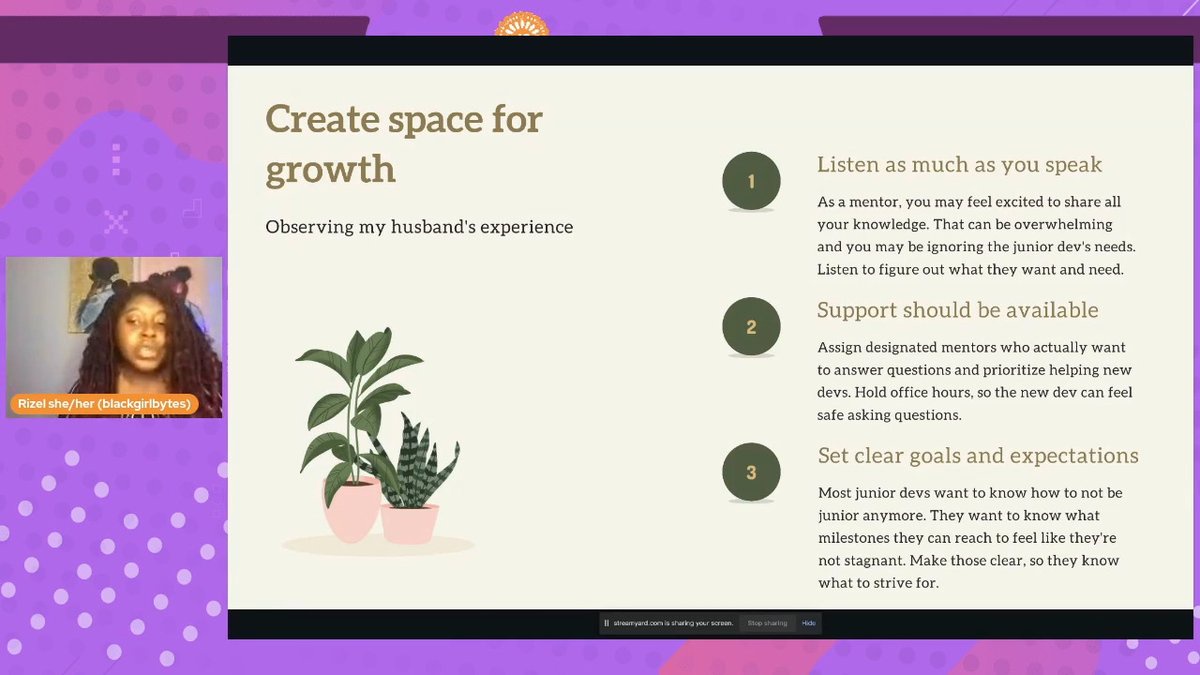
Not only are these slides from @blackgirlbytes' #jsconfmx talk visually stunning but they mesh so well with the narrative, subconsciously evoking the mental image of calmly grooming your budding developers (or your junior selves!) to grow and bloom 🌷
{
    "type": "entry",
    "published": "2021-11-29T17:50:42+00:00",
    "url": "https://twitter.com/slsoftworks/status/1465377693013360654",
    "photo": [
        "https://pbs.twimg.com/media/FFYP9rGWQAIqjph.jpg"
    ],
    "content": {
        "text": "Not only are these slides from @blackgirlbytes' #jsconfmx talk visually stunning but they mesh so well with the narrative, subconsciously evoking the mental image of calmly grooming your budding developers (or your junior selves!) to grow and bloom \ud83c\udf37",
        "html": "Not only are these slides from <a href=\"https://twitter.com/blackgirlbytes\">@blackgirlbytes</a>' <a href=\"https://twitter.com/search?q=%23jsconfmx\">#jsconfmx</a> talk visually stunning but they mesh so well with the narrative, subconsciously evoking the mental image of calmly grooming your budding developers (or your junior selves!) to grow and bloom \ud83c\udf37"
    },
    "author": {
        "type": "card",
        "name": "flaki",
        "url": "https://twitter.com/slsoftworks",
        "photo": "https://pbs.twimg.com/profile_images/749678683514896385/7gxIRnoC.jpg"
    },
    "post-type": "photo",
    "_id": "25413012",
    "_source": "2773"
}
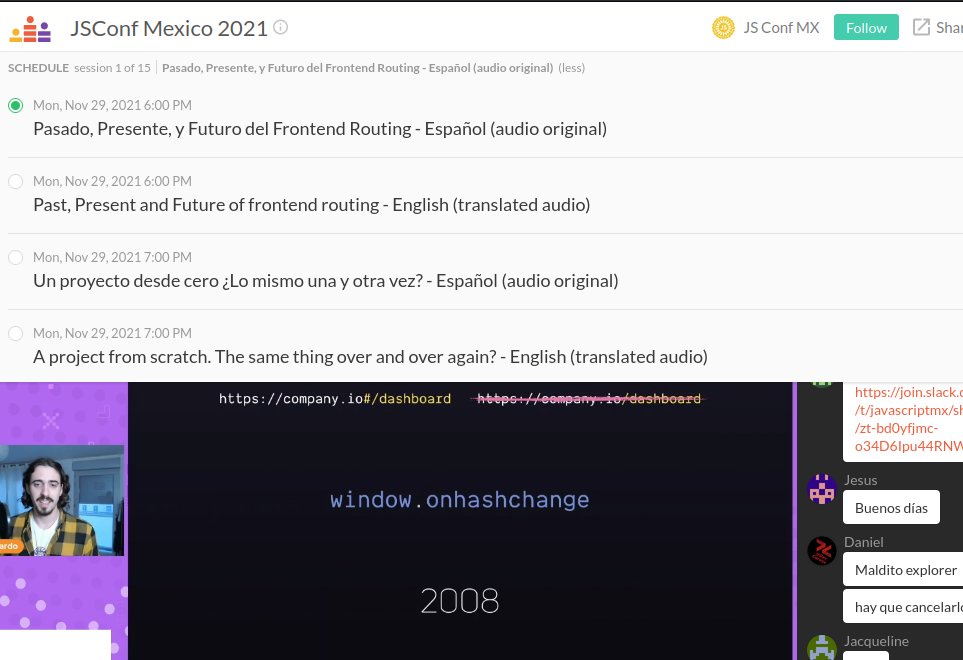
And they have live translation in both English & Spanish!! 💖💖💖
{
    "type": "entry",
    "published": "2021-11-29T16:10:35+00:00",
    "url": "https://twitter.com/slsoftworks/status/1465352497816645648",
    "photo": [
        "https://pbs.twimg.com/media/FFX6TiNXEAIl2DJ.jpg"
    ],
    "quotation-of": "https://twitter.com/janl/status/1465344000551002123",
    "content": {
        "text": "And they have live translation in both English & Spanish!! \ud83d\udc96\ud83d\udc96\ud83d\udc96",
        "html": "And they have live translation in both English & Spanish!! \ud83d\udc96\ud83d\udc96\ud83d\udc96"
    },
    "author": {
        "type": "card",
        "name": "flaki",
        "url": "https://twitter.com/slsoftworks",
        "photo": "https://pbs.twimg.com/profile_images/749678683514896385/7gxIRnoC.jpg"
    },
    "post-type": "photo",
    "refs": {
        "https://twitter.com/janl/status/1465344000551002123": {
            "type": "entry",
            "published": "2021-11-29T15:36:49+00:00",
            "url": "https://twitter.com/janl/status/1465344000551002123",
            "content": {
                "text": "Happy @jsconfmx day! \ud83d\udc9b",
                "html": "Happy <a href=\"https://twitter.com/jsconfmx\">@jsconfmx</a> day! \ud83d\udc9b"
            },
            "author": {
                "type": "card",
                "name": "Jan Lehnardt",
                "url": "https://twitter.com/janl",
                "photo": "https://pbs.twimg.com/profile_images/1151406614752169984/pJdsa0mM.png"
            },
            "post-type": "note"
        }
    },
    "_id": "25410306",
    "_source": "2773"
}
Someone literally emailed me to explain that blockchain-less decentralized systems can’t work at scale.
{
    "type": "entry",
    "published": "2021-11-29T16:10:32+00:00",
    "url": "https://twitter.com/dangerdave/status/1465352485598494728",
    "content": {
        "text": "Someone literally emailed me to explain that blockchain-less decentralized systems can\u2019t work at scale."
    },
    "author": {
        "type": "card",
        "name": "Dave Peck",
        "url": "https://twitter.com/dangerdave",
        "photo": "https://pbs.twimg.com/profile_images/1412221984390352897/2Ysz4jNz.jpg"
    },
    "post-type": "note",
    "_id": "25410307",
    "_source": "2773"
}
Very sorry to hear that Jack is stepping down as CEO of Twitter. He helped save the company IMO (listen here: jaredwhite.com/podcast/75/)
But I'm cautiously optimistic thst CTO @paraga will do a good job as CEO, continuing Twitter's makeover as more open and developer-friendly.
{
    "type": "entry",
    "published": "2021-11-29T16:01:36+00:00",
    "url": "https://twitter.com/jaredcwhite/status/1465350240551145478",
    "content": {
        "text": "Very sorry to hear that Jack is stepping down as CEO of Twitter. He helped save the company IMO (listen here: jaredwhite.com/podcast/75/)\n\nBut I'm cautiously optimistic thst CTO @paraga will do a good job as CEO, continuing Twitter's makeover as more open and developer-friendly.",
        "html": "Very sorry to hear that Jack is stepping down as CEO of Twitter. He helped save the company IMO (listen here: <a href=\"https://jaredwhite.com/podcast/75/\">jaredwhite.com/podcast/75/</a>)\n\nBut I'm cautiously optimistic thst CTO <a href=\"https://twitter.com/paraga\">@paraga</a> will do a good job as CEO, continuing Twitter's makeover as more open and developer-friendly."
    },
    "author": {
        "type": "card",
        "name": "Jared White \ud83d\udd2e",
        "url": "https://twitter.com/jaredcwhite",
        "photo": "https://pbs.twimg.com/profile_images/1431863008288931841/hsLQJBv4.jpg"
    },
    "post-type": "note",
    "_id": "25410048",
    "_source": "2773"
}
{
    "type": "entry",
    "published": "2021-11-29T14:10:52+00:00",
    "url": "https://twitter.com/kitt/status/1465322372160962567",
    "content": {
        "text": "\ud83c\udde6\ud83c\uddf6, incoming."
    },
    "author": {
        "type": "card",
        "name": "Kitt Hodsden",
        "url": "https://twitter.com/kitt",
        "photo": "https://pbs.twimg.com/profile_images/1328422362962743296/Mz9RZKvo.jpg"
    },
    "post-type": "note",
    "_id": "25407413",
    "_source": "2773"
}
Live now! Join on youtube: youtu.be/QlUF_qog2Nk
{
    "type": "entry",
    "published": "2021-11-29T01:01:00+00:00",
    "url": "https://twitter.com/anomalily/status/1465123594627919873",
    "content": {
        "text": "Live now! Join on youtube: youtu.be/QlUF_qog2Nk",
        "html": "Live now! Join on youtube: <a href=\"https://youtu.be/QlUF_qog2Nk\">youtu.be/QlUF_qog2Nk</a>"
    },
    "author": {
        "type": "card",
        "name": "Lillian Karabaic",
        "url": "https://twitter.com/anomalily",
        "photo": "https://pbs.twimg.com/profile_images/1455236306162761732/jPv9ROKG.jpg"
    },
    "post-type": "note",
    "_id": "25396522",
    "_source": "2773"
}
Live in one hour over on youtube! Talking planners, black friday market losses, and eating a donut. youtu.be/QlUF_qog2Nk
{
    "type": "entry",
    "published": "2021-11-29T00:06:56+00:00",
    "url": "https://twitter.com/anomalily/status/1465109988792102924",
    "content": {
        "text": "Live in one hour over on youtube! Talking planners, black friday market losses, and eating a donut.  youtu.be/QlUF_qog2Nk",
        "html": "Live in one hour over on youtube! Talking planners, black friday market losses, and eating a donut.  <a href=\"https://youtu.be/QlUF_qog2Nk\">youtu.be/QlUF_qog2Nk</a>"
    },
    "author": {
        "type": "card",
        "name": "Lillian Karabaic",
        "url": "https://twitter.com/anomalily",
        "photo": "https://pbs.twimg.com/profile_images/1455236306162761732/jPv9ROKG.jpg"
    },
    "post-type": "note",
    "_id": "25395728",
    "_source": "2773"
}
Typora updated today and asked for registration (or a 15-day trial), and there wasn't the slightest doubt or hesitation in my mind to pay for the one-time, no subscription $15 license fee, good for 3 devices and across platforms (yes, I'm on Linux and it works GREAT!).
Typora now finally reaches v1.0 🎉🎉🎉🎉 Thank you for all the support → typora.io
{
    "type": "entry",
    "published": "2021-11-28T23:56:21+00:00",
    "url": "https://twitter.com/slsoftworks/status/1465107326076129283",
    "quotation-of": "https://twitter.com/Typora/status/1464204842604269577",
    "content": {
        "text": "Typora updated today and asked for registration (or a 15-day trial), and there wasn't the slightest doubt or hesitation in my mind to pay for the one-time, no subscription $15 license fee, good for 3 devices and across platforms (yes, I'm on Linux and it works GREAT!)."
    },
    "author": {
        "type": "card",
        "name": "flaki",
        "url": "https://twitter.com/slsoftworks",
        "photo": "https://pbs.twimg.com/profile_images/749678683514896385/7gxIRnoC.jpg"
    },
    "post-type": "note",
    "refs": {
        "https://twitter.com/Typora/status/1464204842604269577": {
            "type": "entry",
            "published": "2021-11-26T12:10:12+00:00",
            "url": "https://twitter.com/Typora/status/1464204842604269577",
            "content": {
                "text": "Typora now finally reaches v1.0 \ud83c\udf89\ud83c\udf89\ud83c\udf89\ud83c\udf89 Thank you for all the support \u2192 typora.io",
                "html": "Typora now finally reaches v1.0 \ud83c\udf89\ud83c\udf89\ud83c\udf89\ud83c\udf89 Thank you for all the support \u2192 <a href=\"https://typora.io/\">typora.io</a>"
            },
            "author": {
                "type": "card",
                "name": "Typora",
                "url": "https://twitter.com/Typora",
                "photo": "https://pbs.twimg.com/profile_images/1385868170930491392/lFo97OOu.jpg"
            },
            "post-type": "note"
        }
    },
    "_id": "25395607",
    "_source": "2773"
}
Found some receipts from traveling in 2019. Oh those were the days. #Corona
{
    "type": "entry",
    "published": "2021-11-28T22:57:49+00:00",
    "url": "https://twitter.com/Johannes_Ernst/status/1465092596963840000",
    "content": {
        "text": "Found some receipts from traveling in 2019. Oh those were the days. #Corona",
        "html": "Found some receipts from traveling in 2019. Oh those were the days. <a href=\"https://twitter.com/search?q=%23Corona\">#Corona</a>"
    },
    "author": {
        "type": "card",
        "name": "Johannes Ernst",
        "url": "https://twitter.com/Johannes_Ernst",
        "photo": "https://pbs.twimg.com/profile_images/462335209015238656/ie0cRjdx.jpeg"
    },
    "post-type": "note",
    "_id": "25394739",
    "_source": "2773"
}
One wonders what kind of people are running the “justice” system who would ever think this could be a good policy.
twitter.com/aclu/status/14…
Maricopa County prosecutors are abusing their power to coerce guilty pleas.
Prosecutors are supposed to serve the public interest with integrity.
aclu.org/news/criminal...
{
"type": "entry",
"published": "2021-11-28T20:27:07+00:00",
"url": "https://twitter.com/Johannes_Ernst/status/1465054671999934465",
"quotation-of": "https://twitter.com/ACLU/status/1465053136809299968",
"content": {
"text": "One wonders what kind of people are running the \u201cjustice\u201d system who would ever think this could be a good policy.\ntwitter.com/aclu/status/14\u2026",
"html": "One wonders what kind of people are running the \u201cjustice\u201d system who would ever think this could be a good policy.\n<a href=\"https://twitter.com/aclu/status/1465053136809299968\">twitter.com/aclu/status/14\u2026</a>"
},
"author": {
"type": "card",
"name": "Johannes Ernst",
"url": "https://twitter.com/Johannes_Ernst",
"photo": "https://pbs.twimg.com/profile_images/462335209015238656/ie0cRjdx.jpeg"
},
"post-type": "note",
"refs": {
"https://twitter.com/ACLU/status/1465053136809299968": {
"type": "entry",
"published": "2021-11-28T20:21:01+00:00",
"url": "https://twitter.com/ACLU/status/1465053136809299968",
"content": {
"text": "Maricopa County prosecutors are abusing their power to coerce guilty pleas.\n\nProsecutors are supposed to serve the public interest with integrity. \naclu.org/news/criminal-\u2026",
"html": "Maricopa County prosecutors are abusing their power to coerce guilty pleas.\n\nProsecutors are supposed to serve the public interest with integrity. \n<a href=\"https://www.aclu.org/news/criminal-law-reform/coerced-out-of-justice-how-prosecutors-abuse-their-power-to-secure-guilty-pleas/?initms_aff=nat&initms_chan=soc&utm_medium=soc&initms=211124_blog_tw&utm_source=tw&utm_campaign=&utm_content=211124_criminallaw_blog&ms_aff=nat&ms_chan=soc&ms=211124_blog_tw\">aclu.org/news/criminal-\u2026</a>"
},
"author": {
"type": "card",
"name": "ACLU",
"url": "https://twitter.com/ACLU",
"photo": "https://pbs.twimg.com/profile_images/1352017274769698820/EJvvRU7p.png"
},
"post-type": "note"
}
},
"_id": "25392426",
"_source": "2773"
}
I've RSVP'd to @sims_mss event The Rescue of Armenian Historiography and the Chronicle of Matthew of Edessa library.upenn.edu/about/exhibits…
Some of my friends at @MyGlendaleLAC and their constituents may find it to be of interest.
{
    "type": "entry",
    "published": "2021-11-28T19:25:31+00:00",
    "url": "https://twitter.com/ChrisAldrich/status/1465039168296210434",
    "content": {
        "text": "I've RSVP'd to @sims_mss event The Rescue of Armenian Historiography and the Chronicle of Matthew of Edessa library.upenn.edu/about/exhibits\u2026\nSome of my friends at @MyGlendaleLAC and their constituents may find it to be of interest.",
        "html": "I've RSVP'd to <a href=\"https://twitter.com/sims_mss\">@sims_mss</a> event The Rescue of Armenian Historiography and the Chronicle of Matthew of Edessa <a href=\"https://www.library.upenn.edu/about/exhibits-events/rescue-armenian-historiography-and-chronicle-matthew-edessa\">library.upenn.edu/about/exhibits\u2026</a>\nSome of my friends at <a href=\"https://twitter.com/myglendaleLAC\">@MyGlendaleLAC</a> and their constituents may find it to be of interest."
    },
    "author": {
        "type": "card",
        "name": "Chris Aldrich",
        "url": "https://twitter.com/ChrisAldrich",
        "photo": "https://pbs.twimg.com/profile_images/890299009381916672/CafdvvxN.jpg"
    },
    "post-type": "note",
    "_id": "25391260",
    "_source": "2773"
}
Happy Hanukkah to all those starting their festival of light .
May we all be our own Maccabees and have spirit warriors to shield us from a path of darkness lnkd.in/eM9unTuX
{
    "type": "entry",
    "published": "2021-11-28T14:16:31+00:00",
    "url": "https://twitter.com/jgmac1106/status/1464961404222509069",
    "content": {
        "text": "Happy Hanukkah to all those starting their festival of light .\n\nMay we all be our own Maccabees and have spirit warriors to shield us from a path of darkness lnkd.in/eM9unTuX",
        "html": "Happy Hanukkah to all those starting their festival of light .\n\nMay we all be our own Maccabees and have spirit warriors to shield us from a path of darkness <a href=\"https://lnkd.in/eM9unTuX\">lnkd.in/eM9unTuX</a>"
    },
    "author": {
        "type": "card",
        "name": "https://jgregorymcverry.com",
        "url": "https://twitter.com/jgmac1106",
        "photo": "https://pbs.twimg.com/profile_images/565227710104883200/g4MDcTnx.jpeg"
    },
    "post-type": "note",
    "_id": "25385946",
    "_source": "2773"
}
Have you experienced an awakening during eternal Caturday?
{
    "type": "entry",
    "published": "2021-11-28T08:49:27-0500",
    "url": "https://martymcgui.re/2021/11/28/084927/",
    "category": [
        "caturday"
    ],
    "video": [
        "https://res.cloudinary.com/schmarty/video/upload/vc_h264/mmmgre/4f/35/10/19/46bf30d6670f46fb550d1c90d10cf75e7854b7507965c01f292f6f16.mov"
    ],
    "content": {
        "text": "Have you experienced an awakening during eternal Caturday?",
        "html": "<p>Have you experienced an awakening during eternal Caturday?</p>"
    },
    "author": {
        "type": "card",
        "name": "Marty McGuire",
        "url": "https://martymcgui.re/",
        "photo": "https://martymcgui.re/images/logo.jpg"
    },
    "post-type": "video",
    "_id": "25385477",
    "_source": "175"
}


{
    "type": "entry",
    "published": "2021-11-28T07:33:58+00:00",
    "url": "https://twitter.com/slsoftworks/status/1464860099336450049",
    "photo": [
        "https://pbs.twimg.com/media/FFQ6ZJoXwAQhTdE.jpg"
    ],
    "quotation-of": "https://twitter.com/MI_Ghostbusters/status/1464772456393105409",
    "content": {
        "text": "Meanwhile Tallinn:"
    },
    "author": {
        "type": "card",
        "name": "flaki",
        "url": "https://twitter.com/slsoftworks",
        "photo": "https://pbs.twimg.com/profile_images/749678683514896385/7gxIRnoC.jpg"
    },
    "post-type": "photo",
    "refs": {
        "https://twitter.com/MI_Ghostbusters/status/1464772456393105409": {
            "type": "entry",
            "published": "2021-11-28T01:45:42+00:00",
            "url": "https://twitter.com/MI_Ghostbusters/status/1464772456393105409",
            "video": [
                "https://video.twimg.com/tweet_video/FFPqlREXIA4gZkW.mp4"
            ],
            "content": {
                "text": "MI right now:"
            },
            "author": {
                "type": "card",
                "name": "Michigan Ghostbusters",
                "url": "https://twitter.com/MI_Ghostbusters",
                "photo": "https://pbs.twimg.com/profile_images/1402282290781241351/2E0g3fYc.jpg"
            },
            "post-type": "video"
        }
    },
    "_id": "25381181",
    "_source": "2773"
}
{
    "type": "entry",
    "author": {
        "name": "Cathie",
        "url": "https://cathieleblanc.com/",
        "photo": null
    },
    "url": "https://cathieleblanc.com/2021/11/27/tackling-a-wicked-problem-revisited/",
    "published": "2021-11-27T17:39:36-05:00",
    "content": {
        "html": "<p>Back near the start of the Cluster Pedagogy Learning Community (CPLC) at PSU, I wrote a <a href=\"https://cathieleblanc.com/2019/05/10/what-is-tackling-a-wicked-problem/\">blog post</a> called \u201cWhat is Tackling a Wicked Problem?\u201d, documenting the history of our development of <em>Tackling a Wicked Problem </em>(TWP), a course required of all First Year Students. I use that post to give new instructors of the course an overview of what the course is all about. I\u2019m now developing an instructor\u2019s manual for the course and so I thought I\u2019d update the post explaining what the course is all about.</p>\n<p>TWP is part of PSU\u2019s General Education program and represents the first course in which students will learn about and have opportunities to practice the goals of the program. These goals, which we call <a href=\"https://wicked-problem.press.plymouth.edu/chapter/what-are-the-habits-of-mind/\">Habits of Mind</a>, are purposeful communication, problem-solving, integrated perspective, and self-regulated.</p>\n<p>When we communicate purposefully, we are aware of the historical and cultural context in which the communication is taking place (awareness of context), we are able to comprehend messages that others are communicating to us (comprehension), we are able to provide evidence and strong arguments in our message that are appropriate to our audience (purposeful expression), and we think about what we are trying to achieve through our communication and use communication strategies that will help us achieve those goals (effective application of strategies).</p>\n<p>If we are effective problem solvers, we can determine the various parts of the problem (problem-framing), we understand the challenges we might encounter in trying to solve the problem (challenge identification), we develop a plan for solving the problem (plan development), we decide how to proceed with the solution and revise our plan if new information indicates that we should do so (decision-making and revision), and we are able to evaluate our progress in solving the problem (evaluation).</p>\n<p>Effective integration of perspectives means that we understand that our perspective of a situation is not the only perspective but arises out of our personal experiences in the world (self-awareness), that we seek out perspectives that differ from our own (perspective-seeking), that we understand that our personal decisions have an impact on the world beyond ourselves (interconnectedness), and that we can effectively collaborate with others (collaboration).</p>\n<p>Finally, if we are self-regulated learners, we take responsibility for our own learning and understand that, in order to learn, we must commit to and be engaged with  own learning (engagement in the learning process), and we understand how we learn best and seek ways to provide those experiences for ourselves (meta-cognition).</p>\n<p>These Habits of Mind are ways of engaging with the world that employers say are important to them when evaluating potential employees. For example, <a href=\"https://www.naceweb.org/about-us/press/the-key-attributes-employers-seek-on-college-graduates-resumes/\">a 2021 survey by the National Association of Colleges and Employers (NACE)</a> indicates that more than two thirds of employers look for the following skills when evaluating the resumes of college graduates: ability to work in a team, problem-solving skills, analytical/quantitative skills, communication skills (both written and verbal), initiative, leadership, and technical skills. Only analytical/quantitative and technical skills are not mentioned (or strongly implied) in our descriptions of the Habits of Mind but both are explicitly part of our General Education program. <a href=\"https://www.naceweb.org/career-readiness/competencies/employers-rate-career-competencies-new-hire-proficiency/\">Study</a> <a href=\"https://www.aacu.org/blog/college-career-success-how-educators-and-employers-talk-about-skills\">after</a> <a href=\"https://www.shrm.org/hr-today/trends-and-forecasting/research-and-surveys/PublishingImages/Pages/Entry-Level-Applicant-Job-Skills-Survey-/Entry-Level%20Applicant%20Job%20Skills%20Survey.pdf\">study</a> shows that the kinds of \u201csoft skills\u201d are among the most important things that employers look for when hiring new employees.</p>\n<p>As I said earlier, TWP is a course where we can guarantee that every student will have the opportunity to practice and develop the Habits of Mind. This means we need to design learning experiences in TWP for students to have the opportunity for this practice and development. There are lots of ways to design such experiences so we have looked at the kind of work faculty were already doing in their classes at PSU and have developed the <a href=\"https://colab.plymouthcreate.net/clusterlearning/\">Integrated Cluster Learning model</a> as a framework for designing those experiences. The Integrated Cluster Learning model focuses on three strands of educational practice: interdisciplinarity, project-based learning, and open education. In TWP, we combine all three of these strands to design the learning experiences that provide students with the opportunity to practice the Habits of Mind.</p>\n<p>I <a href=\"https://cathieleblanc.com/2021/08/03/the-cluster-initiative-at-psu/\">wrote previously</a> about each of the three strands of the Cluster Learning Model:</p>\n<blockquote><p>When a student chooses to major in a particular field, they are choosing to learn a particular set of ways of viewing and engaging with the world.  Each student will learn about the methods used in their chosen field. They will learn about what counts as evidence or knowledge in their chosen field (which is called epistemology) as well as the historical development of these methodological and epistemological choices. These items comprise the discipline of their chosen field. The ways that an English major engages with the world is quite different than the ways that a Physics major engages with the world. This is an example of <em>disciplinarity</em>. Plymouth State University students have a strong disciplinary grounding through the courses in their major. The Cluster Learning Model focuses <em>interdisciplinarity</em>. We bring students together in interdisciplinary teams (students from different majors) and help them to integrate their particular disciplinary expertise with that of other students. Students learn to talk and collaborate with other students whose backgrounds and education cause them to view and engage with the world differently.</p>\n<p>We believe that deep learning comes from action. Therefore, we provide students with the opportunity to work on projects that will make a difference in the world. This <em>project-based learning</em> allows students to practice all of the Habits of Mind as they take increasing responsibility for designing and implementing group projects that will make a difference in the world.</p>\n<p>And we understand that our students come to us with full lives outside of the classroom. We are committed to using open educational practices (which is called <em>open pedagogy</em>) to take those lives into account. Open pedagogy means that we try to break down various barriers that are features of traditional educational experiences. For example, we break down the economic barrier to access to educational materials by using Open Educational Resources (OER) which are free to students. We understand that students come to us with pre-existing knowledge and that they can do more than simply consume knowledge created by others. They can contribute knowledge that benefits the world and so we engage them in writing OER and creating web sites and designing and developing projects with and for off-campus partners. We want our students to have the opportunity to practice their self-regulated learning skills and so we break down the traditional conception of who has control in the classroom. We provide our students with opportunities to determine what they will learn about a particular topic, how they will learn it, and how they will demonstrate their learning. Open pedagogical practices allow us to truly put students at the center of the classroom.</p></blockquote>\n<p>In the same <a href=\"https://cathieleblanc.com/2021/08/03/the-cluster-initiative-at-psu/\">blog post</a>, I wrote a bit about TWP:</p>\n<blockquote><p>In their first year at PSU, students are required to take <em>Tackling a Wicked Problem (TWP)</em>. Each section of the course is focused on a cultural or societal problem (a wicked problem) that is extremely difficult, if not impossible, to solve because there are so many perspectives on the cause of the problem, because implementing solutions would be expensive and likely have unforeseen negative consequences, and because the problem is intimately connected to other wicked problems. Examples of wicked problems from previous sections of TWP include homelessness, poverty, racism, climate change, disinformation, gender inequality, pollinator decline, hunger, and so on.</p></blockquote>\n<p>Although each section of TWP is focused on a different wicked problem, they all have the same goal: to give students the opportunity to practice the Habits of Mind. There is a common assignment in which students learn about the Habits of Mind and reflect on their development of them before they entered the class, identifying their strengths and areas that they might need to work on. At least twice during the semester, they reflect on their continued development of the Habits of Mind as they engage in the activities of the class and they do a final reflection at the end of the semester. The activities are focused on students designing projects that will address some aspect of the wicked problem:</p>\n<blockquote>\n<blockquote><p>In the class, students are guided by a faculty member to design and develop projects that might have some lasting impact on some part of the problem. Students will not solve the problem but are trying to make a some sort of difference in the world. They might organize a food drive to combat hunger in their local community. They might design a micro-windmill to provide alternative energy sources in the fight against climate change. They might build a claim checking web site to combat disinformation. They might plan a campus garden that is friendly and attractive to bees and other pollinators. They might organized a petition in support of a low-income housing project to try to combat homelessness in the local community. The students come up with the ideas. They design the projects. They implement the project plans. They think about their current development of the Habits of Mind and set goals for themselves in reflective essays. And through their self-reflective work on their self-designed projects, they work on their communication and problem-solving skills, they collaborate with each other and people outside the classroom, and they begin to develop a sense of agency necessary for becoming self-regulated, life-long learners.</p></blockquote>\n</blockquote>\n<p>One of the challenging things about teaching TWP is that the instructor can\u2019t completely plan the course ahead of time because students will be working on projects that they have designed. In order to complete the projects, students might need to learn things that the instructor didn\u2019t anticipate. For example, when I was teaching a section on climate change, a group of students go very interested in micro-wind and decided to build a prototype of a small, personal windmill, In order to build the windmill, they needed to learn how to read electronics schematics and how to solder. I would never have anticipated that a group of students might need to learn how to solder in a class focused on climate change. If I didn\u2019t know how to solder, my job as an instructor would be to help students figure out how to learn that particular skill.</p>\n<p>In other words, a big part of TWP is to help students learn how to learn. This is also sometimes challenging for students because they are often used to someone telling them what they need to memorize, reproducing that knowledge on an exam, and then moving on to the next content they need to memorize. When we insist that they figure out what they need to learn in order to accomplish the task they are trying to accomplish, students can sometimes feel like we aren\u2019t actually teaching them. Instructors have to work hard to get students to understand that the main goals of TWP are bigger than learning about the wicked problem itself. We have to constantly remind them (and ourselves) that the Habits of Mind are the most important part of the class.</p>\n<p>Because TWP is such a unique course (and because we are concerned about access to instructional materials), we have developed an <a href=\"https://wicked-problem.press.plymouth.edu/\">Open Educational Resource</a> (OER) for TWP. Besides containing information about wicked problems and the Habits of Mind, a large portion of the OER is devoted to information literacy skills. In order to be self-regulated learners who know how to learn new things, students must be able to effectively evaluate the validity and credibility of information in today\u2019s information landscape. So the OER contains traditional information literacy content about things like using the library databases, what peer-review is, etc. In addition, the OER contains information about tools such as the SIFT method for evaluation claims made on social media platforms and random web sites. Students don\u2019t typically write traditional research papers in TWP because the course is focused on taking action in the world but all of the projects should include some sort of research about topics such as populations most affected by the wicked problem, what others are already doing about the wicked problem, how the wicked problem is related to other wicked problems, what resources related to the wicked problem are available in a particular area, and so on.</p>\n<p>TWP is the foundational course in PSU\u2019s Cluster Initiative. It is a challenging but really fun class to teach. Students who participate in the Cluster Pedagogy Learning Community have asked where else they can get the kinds of learning experiences that they had in TWP because they like feeling as though their work in school is making a difference in the world. I hope more faculty become involved in using the Cluster Learning Model, both by teaching TWP and by incorporating some of the ideas of the model in their other classes.</p>\n<p>Image Credit: The featured image is of the syllabus one-pager I created for my Fall 2021 section of TWP which is focused on the wicked problem of disinformation.</p>",
        "text": "Back near the start of the Cluster Pedagogy Learning Community (CPLC) at PSU, I wrote a blog post called \u201cWhat is Tackling a Wicked Problem?\u201d, documenting the history of our development of Tackling a Wicked Problem (TWP), a course required of all First Year Students. I use that post to give new instructors of the course an overview of what the course is all about. I\u2019m now developing an instructor\u2019s manual for the course and so I thought I\u2019d update the post explaining what the course is all about.\nTWP is part of PSU\u2019s General Education program and represents the first course in which students will learn about and have opportunities to practice the goals of the program. These goals, which we call Habits of Mind, are purposeful communication, problem-solving, integrated perspective, and self-regulated.\nWhen we communicate purposefully, we are aware of the historical and cultural context in which the communication is taking place (awareness of context), we are able to comprehend messages that others are communicating to us (comprehension), we are able to provide evidence and strong arguments in our message that are appropriate to our audience (purposeful expression), and we think about what we are trying to achieve through our communication and use communication strategies that will help us achieve those goals (effective application of strategies).\nIf we are effective problem solvers, we can determine the various parts of the problem (problem-framing), we understand the challenges we might encounter in trying to solve the problem (challenge identification), we develop a plan for solving the problem (plan development), we decide how to proceed with the solution and revise our plan if new information indicates that we should do so (decision-making and revision), and we are able to evaluate our progress in solving the problem (evaluation).\nEffective integration of perspectives means that we understand that our perspective of a situation is not the only perspective but arises out of our personal experiences in the world (self-awareness), that we seek out perspectives that differ from our own (perspective-seeking), that we understand that our personal decisions have an impact on the world beyond ourselves (interconnectedness), and that we can effectively collaborate with others (collaboration).\nFinally, if we are self-regulated learners, we take responsibility for our own learning and understand that, in order to learn, we must commit to and be engaged with  own learning (engagement in the learning process), and we understand how we learn best and seek ways to provide those experiences for ourselves (meta-cognition).\nThese Habits of Mind are ways of engaging with the world that employers say are important to them when evaluating potential employees. For example, a 2021 survey by the National Association of Colleges and Employers (NACE) indicates that more than two thirds of employers look for the following skills when evaluating the resumes of college graduates: ability to work in a team, problem-solving skills, analytical/quantitative skills, communication skills (both written and verbal), initiative, leadership, and technical skills. Only analytical/quantitative and technical skills are not mentioned (or strongly implied) in our descriptions of the Habits of Mind but both are explicitly part of our General Education program. Study after study shows that the kinds of \u201csoft skills\u201d are among the most important things that employers look for when hiring new employees.\nAs I said earlier, TWP is a course where we can guarantee that every student will have the opportunity to practice and develop the Habits of Mind. This means we need to design learning experiences in TWP for students to have the opportunity for this practice and development. There are lots of ways to design such experiences so we have looked at the kind of work faculty were already doing in their classes at PSU and have developed the Integrated Cluster Learning model as a framework for designing those experiences. The Integrated Cluster Learning model focuses on three strands of educational practice: interdisciplinarity, project-based learning, and open education. In TWP, we combine all three of these strands to design the learning experiences that provide students with the opportunity to practice the Habits of Mind.\nI wrote previously about each of the three strands of the Cluster Learning Model:\nWhen a student chooses to major in a particular field, they are choosing to learn a particular set of ways of viewing and engaging with the world.  Each student will learn about the methods used in their chosen field. They will learn about what counts as evidence or knowledge in their chosen field (which is called epistemology) as well as the historical development of these methodological and epistemological choices. These items comprise the discipline of their chosen field. The ways that an English major engages with the world is quite different than the ways that a Physics major engages with the world. This is an example of disciplinarity. Plymouth State University students have a strong disciplinary grounding through the courses in their major. The Cluster Learning Model focuses interdisciplinarity. We bring students together in interdisciplinary teams (students from different majors) and help them to integrate their particular disciplinary expertise with that of other students. Students learn to talk and collaborate with other students whose backgrounds and education cause them to view and engage with the world differently.\nWe believe that deep learning comes from action. Therefore, we provide students with the opportunity to work on projects that will make a difference in the world. This project-based learning allows students to practice all of the Habits of Mind as they take increasing responsibility for designing and implementing group projects that will make a difference in the world.\nAnd we understand that our students come to us with full lives outside of the classroom. We are committed to using open educational practices (which is called open pedagogy) to take those lives into account. Open pedagogy means that we try to break down various barriers that are features of traditional educational experiences. For example, we break down the economic barrier to access to educational materials by using Open Educational Resources (OER) which are free to students. We understand that students come to us with pre-existing knowledge and that they can do more than simply consume knowledge created by others. They can contribute knowledge that benefits the world and so we engage them in writing OER and creating web sites and designing and developing projects with and for off-campus partners. We want our students to have the opportunity to practice their self-regulated learning skills and so we break down the traditional conception of who has control in the classroom. We provide our students with opportunities to determine what they will learn about a particular topic, how they will learn it, and how they will demonstrate their learning. Open pedagogical practices allow us to truly put students at the center of the classroom.\nIn the same blog post, I wrote a bit about TWP:\nIn their first year at PSU, students are required to take Tackling a Wicked Problem (TWP). Each section of the course is focused on a cultural or societal problem (a wicked problem) that is extremely difficult, if not impossible, to solve because there are so many perspectives on the cause of the problem, because implementing solutions would be expensive and likely have unforeseen negative consequences, and because the problem is intimately connected to other wicked problems. Examples of wicked problems from previous sections of TWP include homelessness, poverty, racism, climate change, disinformation, gender inequality, pollinator decline, hunger, and so on.\nAlthough each section of TWP is focused on a different wicked problem, they all have the same goal: to give students the opportunity to practice the Habits of Mind. There is a common assignment in which students learn about the Habits of Mind and reflect on their development of them before they entered the class, identifying their strengths and areas that they might need to work on. At least twice during the semester, they reflect on their continued development of the Habits of Mind as they engage in the activities of the class and they do a final reflection at the end of the semester. The activities are focused on students designing projects that will address some aspect of the wicked problem:\n\nIn the class, students are guided by a faculty member to design and develop projects that might have some lasting impact on some part of the problem. Students will not solve the problem but are trying to make a some sort of difference in the world. They might organize a food drive to combat hunger in their local community. They might design a micro-windmill to provide alternative energy sources in the fight against climate change. They might build a claim checking web site to combat disinformation. They might plan a campus garden that is friendly and attractive to bees and other pollinators. They might organized a petition in support of a low-income housing project to try to combat homelessness in the local community. The students come up with the ideas. They design the projects. They implement the project plans. They think about their current development of the Habits of Mind and set goals for themselves in reflective essays. And through their self-reflective work on their self-designed projects, they work on their communication and problem-solving skills, they collaborate with each other and people outside the classroom, and they begin to develop a sense of agency necessary for becoming self-regulated, life-long learners.\n\nOne of the challenging things about teaching TWP is that the instructor can\u2019t completely plan the course ahead of time because students will be working on projects that they have designed. In order to complete the projects, students might need to learn things that the instructor didn\u2019t anticipate. For example, when I was teaching a section on climate change, a group of students go very interested in micro-wind and decided to build a prototype of a small, personal windmill, In order to build the windmill, they needed to learn how to read electronics schematics and how to solder. I would never have anticipated that a group of students might need to learn how to solder in a class focused on climate change. If I didn\u2019t know how to solder, my job as an instructor would be to help students figure out how to learn that particular skill.\nIn other words, a big part of TWP is to help students learn how to learn. This is also sometimes challenging for students because they are often used to someone telling them what they need to memorize, reproducing that knowledge on an exam, and then moving on to the next content they need to memorize. When we insist that they figure out what they need to learn in order to accomplish the task they are trying to accomplish, students can sometimes feel like we aren\u2019t actually teaching them. Instructors have to work hard to get students to understand that the main goals of TWP are bigger than learning about the wicked problem itself. We have to constantly remind them (and ourselves) that the Habits of Mind are the most important part of the class.\nBecause TWP is such a unique course (and because we are concerned about access to instructional materials), we have developed an Open Educational Resource (OER) for TWP. Besides containing information about wicked problems and the Habits of Mind, a large portion of the OER is devoted to information literacy skills. In order to be self-regulated learners who know how to learn new things, students must be able to effectively evaluate the validity and credibility of information in today\u2019s information landscape. So the OER contains traditional information literacy content about things like using the library databases, what peer-review is, etc. In addition, the OER contains information about tools such as the SIFT method for evaluation claims made on social media platforms and random web sites. Students don\u2019t typically write traditional research papers in TWP because the course is focused on taking action in the world but all of the projects should include some sort of research about topics such as populations most affected by the wicked problem, what others are already doing about the wicked problem, how the wicked problem is related to other wicked problems, what resources related to the wicked problem are available in a particular area, and so on.\nTWP is the foundational course in PSU\u2019s Cluster Initiative. It is a challenging but really fun class to teach. Students who participate in the Cluster Pedagogy Learning Community have asked where else they can get the kinds of learning experiences that they had in TWP because they like feeling as though their work in school is making a difference in the world. I hope more faculty become involved in using the Cluster Learning Model, both by teaching TWP and by incorporating some of the ideas of the model in their other classes.\nImage Credit: The featured image is of the syllabus one-pager I created for my Fall 2021 section of TWP which is focused on the wicked problem of disinformation."
    },
    "name": "What is Tackling a Wicked Problem? Revisited",
    "post-type": "article",
    "_id": "25378840",
    "_source": "2782"
}
Yeesh. Miami players pulling an “oh captain my captain” on the TL tonight. Don’t think it’ll work.
{
    "type": "entry",
    "published": "2021-11-28T03:26:16+00:00",
    "url": "https://twitter.com/cleverdevil/status/1464797766761152518",
    "video": [
        "https://video.twimg.com/tweet_video/FFQBzVvVQAItUZF.mp4"
    ],
    "content": {
        "text": "Yeesh. Miami players pulling an \u201coh captain my captain\u201d on the TL tonight. Don\u2019t think it\u2019ll work."
    },
    "author": {
        "type": "card",
        "name": "Jonathan LaCour",
        "url": "https://twitter.com/cleverdevil",
        "photo": "https://pbs.twimg.com/profile_images/1428891351014285317/zGK22rDG.jpg"
    },
    "post-type": "video",
    "_id": "25378806",
    "_source": "2773"
}
{
    "type": "entry",
    "published": "2021-11-28T00:07:12+00:00",
    "url": "https://twitter.com/cleverdevil/status/1464747667964116992",
    "content": {
        "text": "LOL. That\u2019s So Auburn\u2122"
    },
    "author": {
        "type": "card",
        "name": "Jonathan LaCour",
        "url": "https://twitter.com/cleverdevil",
        "photo": "https://pbs.twimg.com/profile_images/1428891351014285317/zGK22rDG.jpg"
    },
    "post-type": "note",
    "_id": "25376552",
    "_source": "2773"
}


