Ooh, this should be good: A Stop Making Sense Tribute Album teaser. First track by Paramore.
{
    "type": "entry",
    "published": "2024-01-17 10:03-0800",
    "url": "https://gregorlove.com/2024/01/ooh-this-should-be/",
    "category": [
        "music"
    ],
    "syndication": [
        "https://bsky.app/profile/gregorlove.com/post/3kj72jedj4g2v"
    ],
    "content": {
        "text": "Ooh, this should be good: A Stop Making Sense Tribute Album teaser. First track by Paramore.",
        "html": "<p>Ooh, this should be good: <i><a href=\"https://youtu.be/RU04lMKwPwc\">A Stop Making Sense Tribute Album</a></i> teaser. First track by Paramore.</p>"
    },
    "author": {
        "type": "card",
        "name": "gRegor Morrill",
        "url": "https://gregorlove.com/",
        "photo": "https://gregorlove.com/site/assets/files/6268/profile-2021-square.300x0.jpg"
    },
    "post-type": "note",
    "_id": "40022148",
    "_source": "95"
}
{
    "type": "entry",
    "published": "2024-01-17T04:14:57-08:00",
    "url": "https://beesbuzz.biz/blog/13808-Ugh-Nissan-Leaf",
    "name": "Ugh, Nissan Leaf",
    "author": {
        "type": "card",
        "name": "fluffy",
        "url": "https://beesbuzz.biz/",
        "photo": "https://beesbuzz.biz/static/headshot.jpg"
    },
    "post-type": "article",
    "_id": "40016721",
    "_source": "2778"
}
{
    "type": "entry",
    "author": {
        "name": "Jared White",
        "url": "https://jaredwhite.com/",
        "photo": null
    },
    "url": "https://jaredwhite.com/links/20240116/apple-app-store-purchase-links-in-us",
    "published": "2024-01-16T17:02:13-08:00",
    "content": {
        "html": "<blockquote>\n  <h2><a href=\"https://9to5mac.com/2024/01/16/apple-revises-us-app-store-rules-to-let-developers-link-to-outside-payment-methods-but-it-will-still-charge-a-commission/\"></a></h2>\n\n  <p>Apple is updating its App Store guidelines to allow developers to link to alternative payment methods, provided that the app also offer purchases through Apple\u2019s own In-App Purchase system.</p>\n\n<p>This means that an app can\u2019t include links to alternative payment platforms if that app doesn\u2019t also use Apple\u2019s In-App Purchase system. The guideline says that developers can apply for an entitlement that allows them to include buttons or links directing users to out-of-app purchasing mechanisms.</p>\n\n</blockquote>\n\n<p>It\u2019s progress. It\u2019s not enough, but it\u2019s <strong>progress</strong>.</p>\n\n<p>Look, folks will argue about the various legalities of the <a href=\"https://jaredwhite.com/tag/apple\">#Apple</a> App Store policies and whether or not the company has the right to control digital <a href=\"https://jaredwhite.com/tag/payments\">#payments</a> to the extent they do. But I most certainly have a hard time sympathizing with anyone who sees Apple as taking the moral high ground on any of this stuff.</p>\n\n<p>In an ideal world, I could buy whatever software I want, from whomever I want, and install that software on my iPad. Yes, I\u2019m fine with bypassing a bajillion scary alerts and pressing a giant red blinking button in the middle of the screen that says \u201c<strong>YOU MIGHT GET A VIRUS!!!</strong> \ud83e\udda0\u2620\ufe0f\u201d. After all, I do this on my Mac all the time, and <em>it\u2019s fine</em>. Really, it is.</p>\n\n<p>I absolutely <em>love</em> using an iPad, but the lack of \u201csideloading\u201d and alternative sources of software really grinds my gears sometimes. If I could boot up a VM and run Fedora Linux on my iPad\u2014just like I do on my Mac\u2014<strong>that would also be swell!</strong></p>",
        "text": "Apple is updating its App Store guidelines to allow developers to link to alternative payment methods, provided that the app also offer purchases through Apple\u2019s own In-App Purchase system.\n\nThis means that an app can\u2019t include links to alternative payment platforms if that app doesn\u2019t also use Apple\u2019s In-App Purchase system. The guideline says that developers can apply for an entitlement that allows them to include buttons or links directing users to out-of-app purchasing mechanisms.\n\n\n\nIt\u2019s progress. It\u2019s not enough, but it\u2019s progress.\n\nLook, folks will argue about the various legalities of the #Apple App Store policies and whether or not the company has the right to control digital #payments to the extent they do. But I most certainly have a hard time sympathizing with anyone who sees Apple as taking the moral high ground on any of this stuff.\n\nIn an ideal world, I could buy whatever software I want, from whomever I want, and install that software on my iPad. Yes, I\u2019m fine with bypassing a bajillion scary alerts and pressing a giant red blinking button in the middle of the screen that says \u201cYOU MIGHT GET A VIRUS!!! \ud83e\udda0\u2620\ufe0f\u201d. After all, I do this on my Mac all the time, and it\u2019s fine. Really, it is.\n\nI absolutely love using an iPad, but the lack of \u201csideloading\u201d and alternative sources of software really grinds my gears sometimes. If I could boot up a VM and run Fedora Linux on my iPad\u2014just like I do on my Mac\u2014that would also be swell!"
    },
    "name": "Link: Revised Apple App Store Guidelines Will Allow External Payment Links in the U.S.",
    "post-type": "article",
    "_id": "40013353",
    "_source": "2783"
}
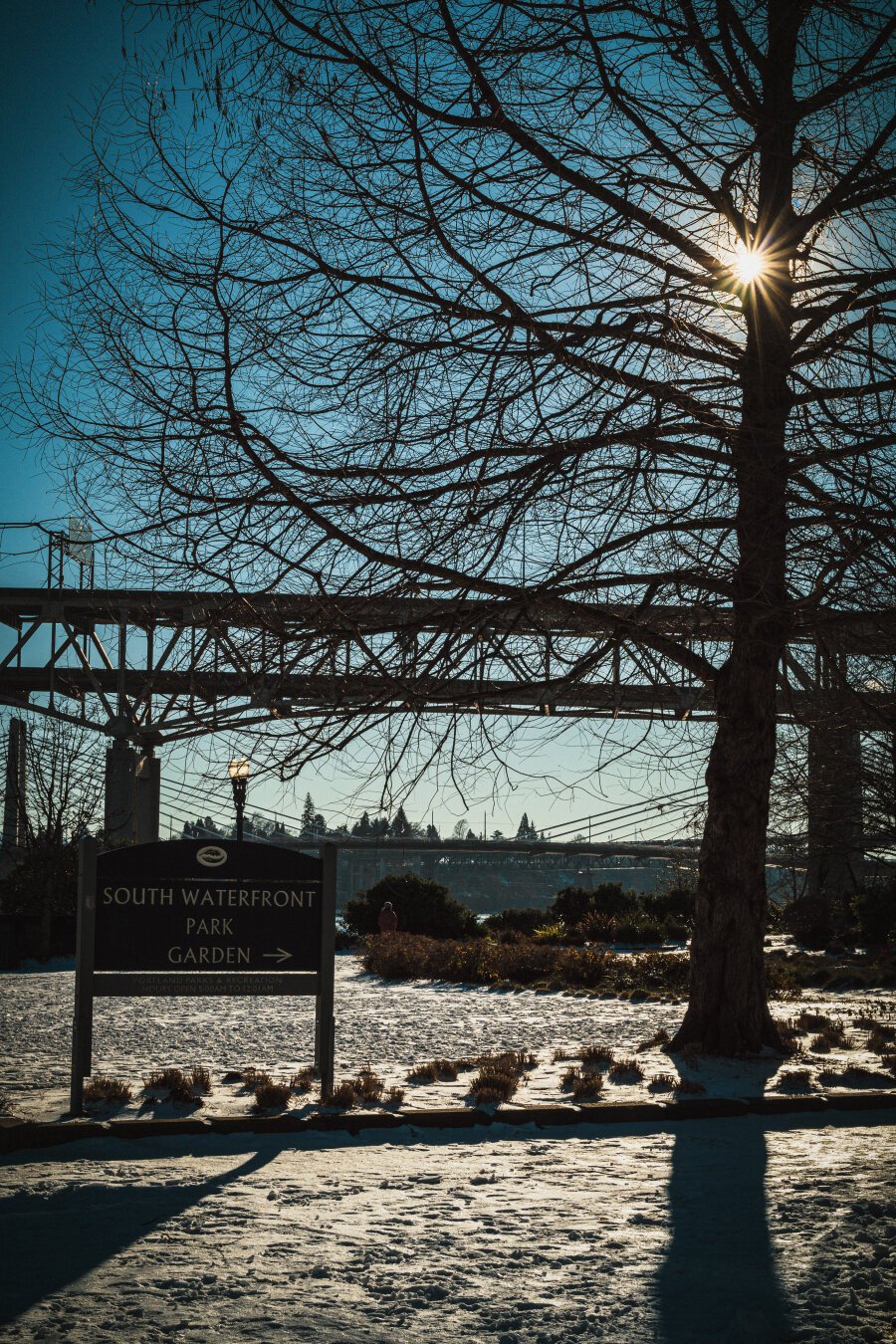
Snow over the weekend, sun on Monday, joy in this photographer’s heart!
#Portland #OregonExplored #NikonZfc
{
    "type": "entry",
    "author": {
        "name": "Jared White",
        "url": "https://jaredwhite.com/",
        "photo": null
    },
    "url": "https://jaredwhite.com/pictures/20240115/snow-over-the-weekend-sun-on-monday-joy-in-this",
    "published": "2024-01-15T10:59:10-08:00",
    "content": {
        "html": "<img alt=\"\" src=\"https://pxscdn.com/public/m/_v2/4580/3b17271c9-2ea36d/30fAL1rm0r0b/xNAuw3f0csalBLqH9FN4uwOrlPzeTOBHaCiSOy6L.jpg\" /><p>Snow over the weekend, sun on Monday, joy in this photographer\u2019s heart!<br /><a href=\"https://jaredwhite.com/tag/portland\">#Portland</a> <a href=\"https://jaredwhite.com/tag/oregonexplored\">#OregonExplored</a> <a href=\"https://jaredwhite.com/tag/nikonzfc\">#NikonZfc</a></p>",
        "text": "Snow over the weekend, sun on Monday, joy in this photographer\u2019s heart!\n#Portland #OregonExplored #NikonZfc"
    },
    "post-type": "note",
    "_id": "40010571",
    "_source": "2783"
}
{
    "type": "entry",
    "published": "2024-01-15T19:34:32-08:00",
    "url": "https://beesbuzz.biz/blog/6639-Come-on-baby-light-my-fire",
    "name": "Come on baby, light my fire",
    "author": {
        "type": "card",
        "name": "fluffy",
        "url": "https://beesbuzz.biz/",
        "photo": "https://beesbuzz.biz/static/headshot.jpg"
    },
    "post-type": "article",
    "_id": "40003613",
    "_source": "2778"
}

I filed a complaint with the CA Department of Insurance shortly after writing about the Geico adventures. These are some of the key parts of the complaint:
On December 4th, I received postal mail from Geico. Their letter was dated November 28, 2023 and was requesting additional information to process the application (vehicle registration, copy of a recent utility bill). It stated "You must provide this information no later than 11/30/2023 at 11:59pm Pacific for us to process your request to purchase a policy. If we do not receive these documents and/or information by this date, a new application for insurance with GEICO is required." Obviously I could not meet this deadline since the mail had not even reached me until December 4, 2023
[attachment: copy of the Geico letter]
I believe GEICO is engaging in unfair business practices and setting up impossible-to-meet requirements in order to avoid taking on new risk in California. I would like the state to investigate and take whatever actions are appropriate to prevent this in the future for other people. I have already chosen to use another insurance provider, so I don't need any particular resolution to my problem described above.
I did send Geico the information they requested on the chance they might approve me quickly, despite their impossible deadline, but I also wasn’t about to wait around. I immediately started the process with AAA. Geico did eventually respond in late December (around the 18th, I think) that I was approved and needed to call to make payment. Surprising, but I already had AAA coverage by that point and was happy to leave Geico behind.
On January 5th, the Department of Insurance responded in part:
I have information indicating your problem is resolved. According to GEICO General Insurance Company, your application has been approved and a payment is required to begin coverage.
Technically correct? Sure. Today I wrote back:
I am responding regarding file number [redacted]. I am not satisfied with Geico’s response in this matter.
I remain concerned that Geico is setting up impossible-to-meet hurdles for CA residents in an attempt to avoid underwriting new customers here. As the documentation in my initial complaint shows, Geico sent me mail requesting additional information after their own deadline.
I still sent Geico the additional information they requested on the chance they would approve me, but I had no reason to believe it would be accepted since their letter clearly said I would need to make a new application after the deadline. Based on the already-poor customer experience, I had no desire to wait around to find out, so I sought and eventually secured coverage from AAA.
I would like to emphasize that the 14-day underwriting process for coverage with AAA was completed before I heard back from Geico approving my application. By contrast, Geico took a month from my application to approve me and had only requested the additional information halfway through that period.
I am not currently interested in receiving coverage from Geico, but I hope you will consider this incident in a potential investigation of unfair business practices by Geico.
{
    "type": "entry",
    "published": "2024-01-15 11:51-0800",
    "url": "https://gregorlove.com/2024/01/i-filed-a-complaint/",
    "category": [
        "InsuranceIsAScam",
        "CapitalismToo",
        "Geico"
    ],
    "content": {
        "text": "I filed a complaint with the CA Department of Insurance shortly after writing about the Geico adventures. These are some of the key parts of the complaint:\n\n\nOn December 4th, I received postal mail from Geico. Their letter was dated November 28, 2023 and was requesting additional information to process the application (vehicle registration, copy of a recent utility bill). It stated \"You must provide this information no later than 11/30/2023 at 11:59pm Pacific for us to process your request to purchase a policy. If we do not receive these documents and/or information by this date, a new application for insurance with GEICO is required.\" Obviously I could not meet this deadline since the mail had not even reached me until December 4, 2023\n\n[attachment: copy of the Geico letter]\n\n\n\nI believe GEICO is engaging in unfair business practices and setting up impossible-to-meet requirements in order to avoid taking on new risk in California. I would like the state to investigate and take whatever actions are appropriate to prevent this in the future for other people. I have already chosen to use another insurance provider, so I don't need any particular resolution to my problem described above.\n\n\nI did send Geico the information they requested on the chance they might approve me quickly, despite their impossible deadline, but I also wasn\u2019t about to wait around. I immediately started the process with AAA. Geico did eventually respond in late December (around the 18th, I think) that I was approved and needed to call to make payment. Surprising, but I already had AAA coverage by that point and was happy to leave Geico behind.\n\nOn January 5th, the Department of Insurance responded in part:\n\n\nI have information indicating your problem is resolved. According to GEICO General Insurance Company, your application has been approved and a payment is required to begin coverage.\n\n\nTechnically correct? Sure. Today I wrote back:\n\n\nI am responding regarding file number [redacted]. I am not satisfied with Geico\u2019s response in this matter.\n\nI remain concerned that Geico is setting up impossible-to-meet hurdles for CA residents in an attempt to avoid underwriting new customers here. As the documentation in my initial complaint shows, Geico sent me mail requesting additional information after their own deadline.\n\nI still sent Geico the additional information they requested on the chance they would approve me, but I had no reason to believe it would be accepted since their letter clearly said I would need to make a new application after the deadline. Based on the already-poor customer experience, I had no desire to wait around to find out, so I sought and eventually secured coverage from AAA.\n\nI would like to emphasize that the 14-day underwriting process for coverage with AAA was completed before I heard back from Geico approving my application. By contrast, Geico took a month from my application to approve me and had only requested the additional information halfway through that period.\n\nI am not currently interested in receiving coverage from Geico, but I hope you will consider this incident in a potential investigation of unfair business practices by Geico.",
        "html": "<p>I filed a complaint with the <a href=\"https://www.insurance.ca.gov/\">CA Department of Insurance</a> shortly after writing about the <a href=\"https://gregorlove.com/2023/12/geico-zero-stars/\">Geico adventures</a>. These are some of the key parts of the complaint:</p>\n\n<blockquote>\n<p>On December 4th, I received postal mail from Geico. Their letter was dated November 28, 2023 and was requesting additional information to process the application (vehicle registration, copy of a recent utility bill). It stated \"You must provide this information no later than 11/30/2023 at 11:59pm Pacific for us to process your request to purchase a policy. If we do not receive these documents and/or information by this date, a new application for insurance with GEICO is required.\" Obviously I could not meet this deadline since the mail had not even reached me until December 4, 2023</p>\n\n<p>[attachment: copy of the Geico letter]</p>\n</blockquote>\n\n<blockquote>\n<p>I believe GEICO is engaging in unfair business practices and setting up impossible-to-meet requirements in order to avoid taking on new risk in California. I would like the state to investigate and take whatever actions are appropriate to prevent this in the future for other people. I have already chosen to use another insurance provider, so I don't need any particular resolution to my problem described above.</p>\n</blockquote>\n\n<p>I did send Geico the information they requested on the chance they might approve me quickly, despite their impossible deadline, but I also wasn\u2019t about to wait around. I immediately started the process with AAA. Geico did eventually respond in late December (around the 18th, I think) that I was approved and needed to call to make payment. Surprising, but I already had AAA coverage by that point and was happy to leave Geico behind.</p>\n\n<p>On January 5th, the Department of Insurance responded in part:</p>\n\n<blockquote>\n<p>I have information indicating your problem is resolved. According to GEICO General Insurance Company, your application has been approved and a payment is required to begin coverage.</p>\n</blockquote>\n\n<p>Technically correct? Sure. Today I wrote back:</p>\n\n<blockquote>\n<p>I am responding regarding file number [redacted]. I am not satisfied with Geico\u2019s response in this matter.</p>\n\n<p>I remain concerned that Geico is setting up impossible-to-meet hurdles for CA residents in an attempt to avoid underwriting new customers here. As the documentation in my initial complaint shows, Geico sent me mail requesting additional information after their own deadline.</p>\n\n<p>I still sent Geico the additional information they requested on the chance they would approve me, but I had no reason to believe it would be accepted since their letter clearly said I would need to make a new application after the deadline. Based on the already-poor customer experience, I had no desire to wait around to find out, so I sought and eventually secured coverage from AAA.</p>\n\n<p>I would like to emphasize that the 14-day underwriting process for coverage with AAA was completed before I heard back from Geico approving my application. By contrast, Geico took a month from my application to approve me and had only requested the additional information halfway through that period.</p>\n\n<p>I am not currently interested in receiving coverage from Geico, but I hope you will consider this incident in a potential investigation of unfair business practices by Geico.</p>\n</blockquote>"
    },
    "author": {
        "type": "card",
        "name": "gRegor Morrill",
        "url": "https://gregorlove.com/",
        "photo": "https://gregorlove.com/site/assets/files/6268/profile-2021-square.300x0.jpg"
    },
    "post-type": "note",
    "_id": "40001429",
    "_source": "95"
}

{
    "type": "entry",
    "published": "2024-01-13 20:07-0800",
    "url": "https://tantek.com/2024/013/t1/remembering-aaronsw-eleven-years",
    "category": [
        "aaronsw",
        "2013_011",
        "aaronswartz"
    ],
    "content": {
        "text": "Still remembering #aaronsw, eleven years, two days ago.\n\nPreviously, previously, previously:\n* https://tantek.com/2017/011/t3/moment-remember-aaronsw\n* https://tantek.com/2016/011/t4/three-years-lost-aaronsw\n* https://tantek.com/2015/011/t1/still-missing-aaronsw\n* https://tantek.com/2013/059/t1/doj-prosecutors-aaronsw-fear-face-saving-not-justice\n* https://tantek.com/2013/029/t1/aaronsw-internet-archive-memorial-videos-speakers\n* https://tantek.com/2013/026/b1/remembering-aaron-swartz-part-2-hacking-essence-advancing-humanity\n* https://tantek.com/2013/025/b1/remembering-aaron-swartz-part-1-you-should-blog-that\n\n#2013_011 #aaronswartz",
        "html": "Still remembering #<span class=\"p-category\">aaronsw</span>, eleven years, two days ago.<br /><br />Previously, previously, previously:<br />* <a href=\"https://tantek.com/2017/011/t3/moment-remember-aaronsw\">https://tantek.com/2017/011/t3/moment-remember-aaronsw</a><br />* <a href=\"https://tantek.com/2016/011/t4/three-years-lost-aaronsw\">https://tantek.com/2016/011/t4/three-years-lost-aaronsw</a><br />* <a href=\"https://tantek.com/2015/011/t1/still-missing-aaronsw\">https://tantek.com/2015/011/t1/still-missing-aaronsw</a><br />* <a href=\"https://tantek.com/2013/059/t1/doj-prosecutors-aaronsw-fear-face-saving-not-justice\">https://tantek.com/2013/059/t1/doj-prosecutors-aaronsw-fear-face-saving-not-justice</a><br />* <a href=\"https://tantek.com/2013/029/t1/aaronsw-internet-archive-memorial-videos-speakers\">https://tantek.com/2013/029/t1/aaronsw-internet-archive-memorial-videos-speakers</a><br />* <a href=\"https://tantek.com/2013/026/b1/remembering-aaron-swartz-part-2-hacking-essence-advancing-humanity\">https://tantek.com/2013/026/b1/remembering-aaron-swartz-part-2-hacking-essence-advancing-humanity</a><br />* <a href=\"https://tantek.com/2013/025/b1/remembering-aaron-swartz-part-1-you-should-blog-that\">https://tantek.com/2013/025/b1/remembering-aaron-swartz-part-1-you-should-blog-that</a><br /><br />#<span class=\"p-category\">2013_011</span> #<span class=\"p-category\">aaronswartz</span>"
    },
    "author": {
        "type": "card",
        "name": "Tantek \u00c7elik",
        "url": "https://tantek.com/",
        "photo": "https://tantek.com/photo.jpg"
    },
    "post-type": "note",
    "_id": "39987096",
    "_source": "2460"
}
Today I learned about supercooling, where a liquid can get below its freezing point without ice forming.
I found a half-drunk bottle of coke in the construction site that was still liquid. As soon as I moved it, the whole thing instantly turned to ice!
{
    "type": "entry",
    "published": "2024-01-13T18:52:05-08:00",
    "url": "https://aaronparecki.com/2024/01/13/14/supercooling",
    "category": [
        "weather"
    ],
    "content": {
        "text": "Today I learned about supercooling, where a liquid can get below its freezing point without ice forming. \n\nI found a half-drunk bottle of coke in the construction site that was still liquid. As soon as I moved it, the whole thing instantly turned to ice!",
        "html": "Today I learned about supercooling, where a liquid can get below its freezing point without ice forming. <br /><br />I found a half-drunk bottle of coke in the construction site that was still liquid. As soon as I moved it, the whole thing instantly turned to ice!"
    },
    "author": {
        "type": "card",
        "name": "Aaron Parecki",
        "url": "https://aaronparecki.com/",
        "photo": "https://aperture-media.p3k.io/aaronparecki.com/41061f9de825966faa22e9c42830e1d4a614a321213b4575b9488aa93f89817a.jpg"
    },
    "post-type": "note",
    "_id": "39985996",
    "_source": "16"
}
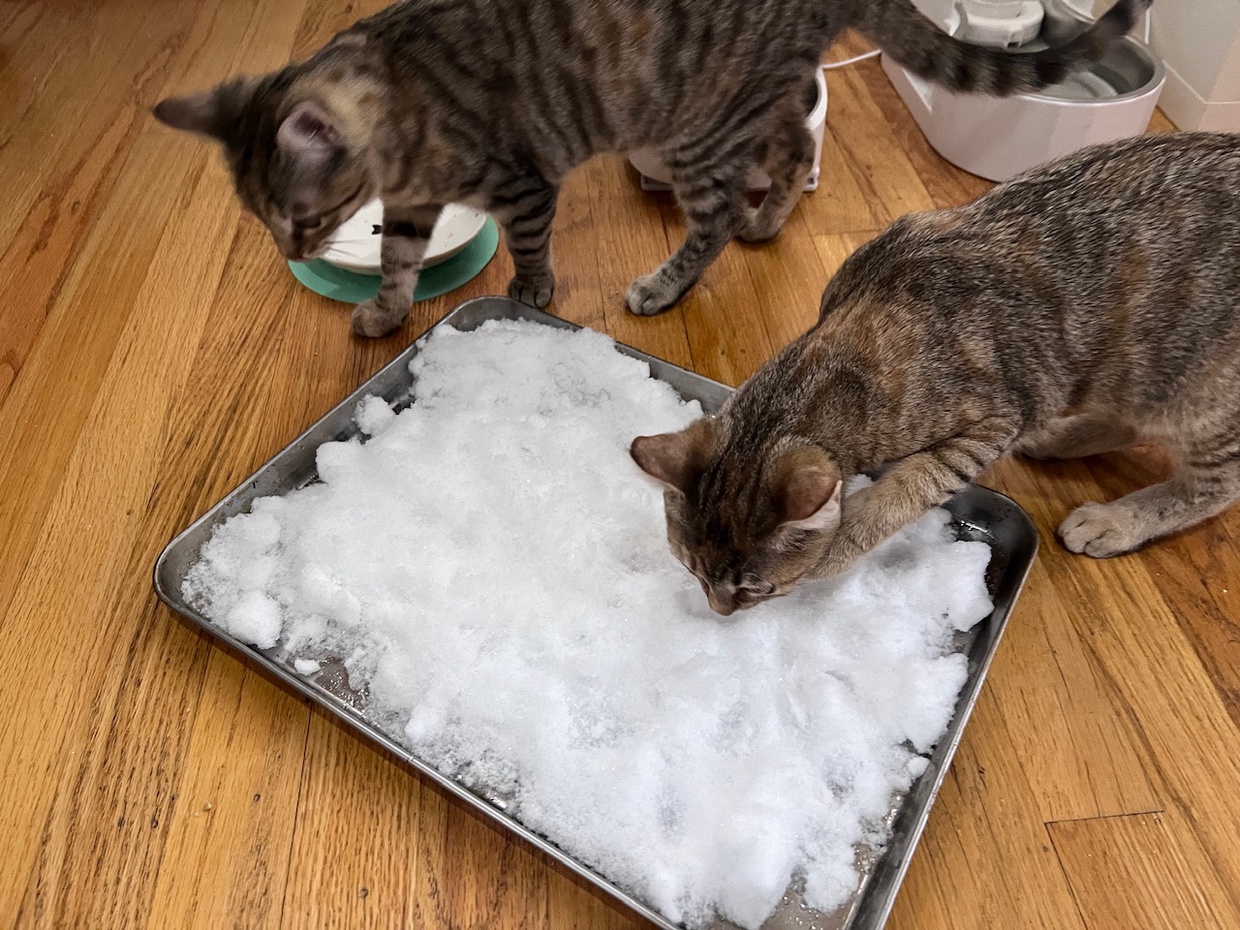
Kittens' first snowpocalypse!
{
    "type": "entry",
    "published": "2024-01-13T14:11:50-08:00",
    "url": "https://aaronparecki.com/2024/01/13/10/snow",
    "category": [
        "snowpocalypse",
        "weather",
        "pdx"
    ],
    "photo": [
        "https://aperture-media.p3k.io/aaronparecki.com/84761819c1b384d2b4014353980a9f4191c505101d3f566baf27cb006c032e60.jpg"
    ],
    "content": {
        "text": "Kittens' first snowpocalypse!"
    },
    "author": {
        "type": "card",
        "name": "Aaron Parecki",
        "url": "https://aaronparecki.com/",
        "photo": "https://aperture-media.p3k.io/aaronparecki.com/41061f9de825966faa22e9c42830e1d4a614a321213b4575b9488aa93f89817a.jpg"
    },
    "post-type": "photo",
    "_id": "39984532",
    "_source": "16"
}
A little late to the party, but I finally watched Shiny Happy People, the documentary series about the Duggar family and the fundamentalist Christian religious world they inhabit.
I have So Many Thoughts, as someone very familiar with this world circa 2004-2016. I hope to share my in-depth perspective soon, but for now I’ll just say this:
We need a LOT more “exvangelical” documentaries. We need more people telling their story. We need these stories represented in art, literature, and cinema. Given the #spirituality dimension we see in American #politics today, it has never been more important.
(Parting thought: we need to hold media accountable for promoting fundamentalism or at least giving it a pass. The Duggars should never have been given a national mainstream TV platform. TLC/Discovery should be ashamed of themselves.)
{
    "type": "entry",
    "author": {
        "name": "Jared White",
        "url": "https://jaredwhite.com/",
        "photo": null
    },
    "url": "https://jaredwhite.com/20240113/shiny-happy-people",
    "published": "2024-01-13T10:47:59-08:00",
    "content": {
        "html": "<p>A little late to the party, but I finally watched <a href=\"https://en.wikipedia.org/wiki/Shiny_Happy_People:_Duggar_Family_Secrets\">Shiny Happy People</a>, the documentary series about the Duggar family and the fundamentalist Christian religious world they inhabit.</p>\n\n<p>I have So Many Thoughts, as <a href=\"https://simplepraxis.life/2019/leaving-it-all-behind-my-exvangelical-story\">someone very familiar with this world</a> circa 2004-2016. I hope to share my in-depth perspective soon, but for now I\u2019ll just say this:</p>\n\n<p>We need a LOT more \u201cexvangelical\u201d documentaries. We need more people telling their story. We need these stories represented in art, literature, and cinema. Given the <a href=\"https://jaredwhite.com/tag/spirituality\">#spirituality</a> dimension we see in American <a href=\"https://jaredwhite.com/tag/politics\">#politics</a> today, it has never been more important.\ufffc</p>\n\n<p>(Parting thought: we need to hold media accountable for promoting fundamentalism or at least giving it a pass. The Duggars should <em>never</em> have been given a national mainstream TV platform. TLC/Discovery should be ashamed of themselves.)</p>",
        "text": "A little late to the party, but I finally watched Shiny Happy People, the documentary series about the Duggar family and the fundamentalist Christian religious world they inhabit.\n\nI have So Many Thoughts, as someone very familiar with this world circa 2004-2016. I hope to share my in-depth perspective soon, but for now I\u2019ll just say this:\n\nWe need a LOT more \u201cexvangelical\u201d documentaries. We need more people telling their story. We need these stories represented in art, literature, and cinema. Given the #spirituality dimension we see in American #politics today, it has never been more important.\ufffc\n\n(Parting thought: we need to hold media accountable for promoting fundamentalism or at least giving it a pass. The Duggars should never have been given a national mainstream TV platform. TLC/Discovery should be ashamed of themselves.)"
    },
    "post-type": "note",
    "_id": "39983536",
    "_source": "2783"
}
📗 Want to read Rest Easy: Discover Calm and Abundance Through the Radical Power of Rest by Ximena Vengoechea ISBN: 9781797219479
{
    "type": "entry",
    "published": "2024-01-12T20:42:00-0500",
    "summary": "\ud83d\udcd7 Want to read Rest Easy: Discover Calm and Abundance Through the Radical Power of Rest by Ximena Vengoechea ISBN: 9781797219479",
    "url": "https://martymcgui.re/2024/01/12/204200/",
    "category": [
        "books"
    ],
    "author": {
        "type": "card",
        "name": "Marty McGuire",
        "url": "https://martymcgui.re/",
        "photo": "https://martymcgui.re/images/logo.jpg"
    },
    "post-type": "note",
    "_id": "39980945",
    "_source": "175"
}
I’m trying to get back into the habit of posting short thoughts here on my blog and linking to them from Mastodon, rather than simply writing on Mastodon directly. And taking a page from other nerds in the blogosphere, I figured I’d experiment with using my favorite monospaced font, Mononoki. Will that help my new habit stick? We’ll see!
{
    "type": "entry",
    "author": {
        "name": "Jared White",
        "url": "https://jaredwhite.com/",
        "photo": null
    },
    "url": "https://jaredwhite.com/20240112/mononoki-habit",
    "published": "2024-01-12T17:10:58-08:00",
    "content": {
        "html": "<p>I\u2019m trying to get back into the habit of posting short thoughts here on my blog and linking to them from Mastodon, rather than simply writing on Mastodon directly. And taking a page from other nerds in the blogosphere, I figured I\u2019d experiment with using my favorite monospaced font, <a href=\"http://madmalik.github.io/mononoki/\">Mononoki</a>. Will that help my new habit stick? We\u2019ll see!</p>",
        "text": "I\u2019m trying to get back into the habit of posting short thoughts here on my blog and linking to them from Mastodon, rather than simply writing on Mastodon directly. And taking a page from other nerds in the blogosphere, I figured I\u2019d experiment with using my favorite monospaced font, Mononoki. Will that help my new habit stick? We\u2019ll see!"
    },
    "post-type": "note",
    "_id": "39977712",
    "_source": "2783"
}
{
    "type": "entry",
    "author": {
        "name": null,
        "url": "https://herestomwiththeweather.com/",
        "photo": null
    },
    "url": "https://herestomwiththeweather.com/2024/01/12/south-africa-lays-out-genocide-case-vs.-israel-at-world-court-in-the-hague/",
    "published": "2024-01-12T12:44:12+00:00",
    "content": {
        "html": "<p><a href=\"https://www.democracynow.org/2024/1/11/south_africa_genocide_case_israel_gaza\">\u201cNowhere Is Safe in Gaza\u201d: South Africa Lays Out Genocide Case vs. Israel at World Court in The Hague</a></p>",
        "text": "\u201cNowhere Is Safe in Gaza\u201d: South Africa Lays Out Genocide Case vs. Israel at World Court in The Hague"
    },
    "name": "South Africa Lays Out Genocide Case vs. Israel at World Court in The Hague",
    "post-type": "note",
    "_id": "39974893",
    "_source": "246"
}
{
"type": "entry",
"author": {
"name": "Cathie",
"url": "https://cathieleblanc.com/",
"photo": null
},
"url": "https://cathieleblanc.com/2024/01/11/what-is-an-academic-discpline/",
"published": "2024-01-11T17:00:52-05:00",
"content": {
"html": "<p>Integrated Capstone (INCAP) classes at Plymouth State University are supposed to engage students in the development of an interdisciplinary signature project. To understand what \u201cinterdisciplinary\u201d means, we first have to understand what we mean by an academic discipline. In my new INCAP class this Spring (Games for Impact), I will be asking students to think about what they have learned in their major and how that learning affects the way that they engage with the world. We all know that students in different majors learn different content. A student in a Biology major might learn about amino acids and how their interactions create proteins with different forms and functions while a student in an English major might learn about the structure of villanelles. The content of a major is the body of knowledge that helps to form the academic discipline that the major is part of. But what other things might students in one academic discipline encounter that students in another discipline wouldn\u2019t? (Note that I am conflating the idea of a major with the idea of an academic discipline for the sake of this exploration. They are not the same thing but the difference is not of concern to the exercise that I want students to engage in.) What else do we need to make an academic discipline?</p>\n<p>One answer:</p>\n<blockquote><p>In fact, there is a whole list of criteria and characteristics, which indicate whether<br />a subject is indeed a distinct discipline. A general list of characteristics would<br />include: 1) disciplines have a particular object of research (e.g. law, society,<br />politics), though the object of research maybe shared with another discipline; 2)<br />disciplines have a body of accumulated specialist knowledge referring to their<br />object of research, which is specific to them and not generally shared with<br />another discipline; 3) disciplines have theories and concepts that can organise<br />the accumulated specialist knowledge effectively; 4) disciplines use specific<br />terminologies or a specific technical language adjusted to their research object;<br />5) disciplines have developed specific research methods according to their<br />specific research requirements; and maybe most crucially 6), disciplines must<br />have some institutional manifestation in the form of subjects taught at universities<br />or colleges, respective academic departments and professional associations<br />connected to it.</p>\n<p>\u2013from <a href=\"https://eprints.ncrm.ac.uk/id/eprint/783/1/what_are_academic_disciplines.pdf\">What are Academic Disciplines?</a> by Armin Krishnan</p></blockquote>\n<p>That is, an academic discipline has:</p>\n<ol><li>An object of research, a particular \u201cthing\u201d that is studied, that may or may not also be studied by other disciplines;</li>\n<li>A body of knowledge (content) related to the object of study which is generally not shared by other disciplines;</li>\n<li>Theories and concepts that organize the content about the object of study;</li>\n<li>Special terminology to talk about the content, theories and concepts in the discipline;</li>\n<li>Accepted methods for how to engage in research; and,</li>\n<li>A set of institutions (colleges, universities, professional societies, etc.) that teach and discuss subjects related to the object of study.</li>\n</ol><p>In another, related perspective, Allen Repko, in his book <a href=\"https://www.thriftbooks.com/w/introduction-to-interdisciplinary-studies-allen-f-repko-with-rick-szostak-and-michelle-buchberger_allen-f-repko/9521570/item/9578797/?utm_source=google&utm_medium=cpc&utm_campaign=high_vol_midlist_standard_shopping_customer_acquisition&utm_adgroup=&utm_term=&utm_content=666157863328&gad_source=1&gclid=Cj0KCQiAwP6sBhDAARIsAPfK_waPevzAJz7TWkQLYR3OzIoAW62FaafnTB2F22GaB0NQt-9mGEcL4XcaAgunEALw_wcB#idiq=9578797&edition=8894926\"><em>Introduction to Interdisciplinary Studies</em></a>, writes, \u201cThe purpose of a discipline \u2026 is to interpret reality according to certain prescribed guidelines and provide provide its members with organizational support.\u201d (p. 88) In other words, an academic discipline \u201cis an identifiable but evolving domain of knowledge that its members study using certain tools that serve as a way of knowing that is powerful but constraining.\u201d (p. 89) Because each discipline uses its own set of guidelines and tools for understanding the world, viewing a particular situation, event, problem, etc. from different disciplinary perspectives is likely to illuminate different parts of the situation, event, problem, etc.</p>\n<p>Repko provides some examples of the ways in which various disciplines view reality. Chemistry, for example, \u201cfocuses on the distinctive properties of the elements, individually and in compounds, and their interactions. Chemistry sees larger-scale objects \u2026 in terms of their constituent elements and compounds.\u201d (p. 98) On the other hand, \u201c[c]ultural anthropology sees individual cultures as organic integrated wholes with their own internal logic and culture as the set of symbols, rituals, and beliefs through which a society gives meaning to daily life\u201d (p. 99) One can imagine that a chemist and a cultural anthropologist might approach the same situation quite differently. The chemist is trained to break large-scale objects into smaller pieces and examine their interactions as the way to understand reality. The cultural anthropologist, on the other hand, is trained that the way to understand reality is by understanding the internal logic of the whole system. These two ways of knowing may arrive at a similar understanding of reality (or they may not). Neither is \u201ccorrect\u201d or better than the other. They are simply two different ways of approaching the world.</p>\n<p>We instructors are not always explicit in explaining to students the ways in which our particular disciplines engage with the world, what counts as knowledge in our disciplines, and which methodologies and tools are \u201cvalid\u201d in our disciplines. When these disciplinary epistemologies, methods, and tools are often implicit, they are invisible to us and taken as \u201ctruth.\u201d In class, we will engage in a series of exercises so that students can begin to articulate the ways in which they have been taught, through their major, to view and engage with the world.</p>",
"text": "Integrated Capstone (INCAP) classes at Plymouth State University are supposed to engage students in the development of an interdisciplinary signature project. To understand what \u201cinterdisciplinary\u201d means, we first have to understand what we mean by an academic discipline. In my new INCAP class this Spring (Games for Impact), I will be asking students to think about what they have learned in their major and how that learning affects the way that they engage with the world. We all know that students in different majors learn different content. A student in a Biology major might learn about amino acids and how their interactions create proteins with different forms and functions while a student in an English major might learn about the structure of villanelles. The content of a major is the body of knowledge that helps to form the academic discipline that the major is part of. But what other things might students in one academic discipline encounter that students in another discipline wouldn\u2019t? (Note that I am conflating the idea of a major with the idea of an academic discipline for the sake of this exploration. They are not the same thing but the difference is not of concern to the exercise that I want students to engage in.) What else do we need to make an academic discipline?\nOne answer:\nIn fact, there is a whole list of criteria and characteristics, which indicate whether\na subject is indeed a distinct discipline. A general list of characteristics would\ninclude: 1) disciplines have a particular object of research (e.g. law, society,\npolitics), though the object of research maybe shared with another discipline; 2)\ndisciplines have a body of accumulated specialist knowledge referring to their\nobject of research, which is specific to them and not generally shared with\nanother discipline; 3) disciplines have theories and concepts that can organise\nthe accumulated specialist knowledge effectively; 4) disciplines use specific\nterminologies or a specific technical language adjusted to their research object;\n5) disciplines have developed specific research methods according to their\nspecific research requirements; and maybe most crucially 6), disciplines must\nhave some institutional manifestation in the form of subjects taught at universities\nor colleges, respective academic departments and professional associations\nconnected to it.\n\u2013from What are Academic Disciplines? by Armin Krishnan\nThat is, an academic discipline has:\nAn object of research, a particular \u201cthing\u201d that is studied, that may or may not also be studied by other disciplines;\nA body of knowledge (content) related to the object of study which is generally not shared by other disciplines;\nTheories and concepts that organize the content about the object of study;\nSpecial terminology to talk about the content, theories and concepts in the discipline;\nAccepted methods for how to engage in research; and,\nA set of institutions (colleges, universities, professional societies, etc.) that teach and discuss subjects related to the object of study.\nIn another, related perspective, Allen Repko, in his book Introduction to Interdisciplinary Studies, writes, \u201cThe purpose of a discipline \u2026 is to interpret reality according to certain prescribed guidelines and provide provide its members with organizational support.\u201d (p. 88) In other words, an academic discipline \u201cis an identifiable but evolving domain of knowledge that its members study using certain tools that serve as a way of knowing that is powerful but constraining.\u201d (p. 89) Because each discipline uses its own set of guidelines and tools for understanding the world, viewing a particular situation, event, problem, etc. from different disciplinary perspectives is likely to illuminate different parts of the situation, event, problem, etc.\nRepko provides some examples of the ways in which various disciplines view reality. Chemistry, for example, \u201cfocuses on the distinctive properties of the elements, individually and in compounds, and their interactions. Chemistry sees larger-scale objects \u2026 in terms of their constituent elements and compounds.\u201d (p. 98) On the other hand, \u201c[c]ultural anthropology sees individual cultures as organic integrated wholes with their own internal logic and culture as the set of symbols, rituals, and beliefs through which a society gives meaning to daily life\u201d (p. 99) One can imagine that a chemist and a cultural anthropologist might approach the same situation quite differently. The chemist is trained to break large-scale objects into smaller pieces and examine their interactions as the way to understand reality. The cultural anthropologist, on the other hand, is trained that the way to understand reality is by understanding the internal logic of the whole system. These two ways of knowing may arrive at a similar understanding of reality (or they may not). Neither is \u201ccorrect\u201d or better than the other. They are simply two different ways of approaching the world.\nWe instructors are not always explicit in explaining to students the ways in which our particular disciplines engage with the world, what counts as knowledge in our disciplines, and which methodologies and tools are \u201cvalid\u201d in our disciplines. When these disciplinary epistemologies, methods, and tools are often implicit, they are invisible to us and taken as \u201ctruth.\u201d In class, we will engage in a series of exercises so that students can begin to articulate the ways in which they have been taught, through their major, to view and engage with the world."
},
"name": "What is an \u201cacademic discpline\u201d?",
"post-type": "article",
"_id": "39967379",
"_source": "2782"
}
📕 Finished reading Practical SVG by Chris Coyier ISBN: 9781952616365
{
    "type": "entry",
    "published": "2024-01-10T15:09:05-0500",
    "summary": "\ud83d\udcd5 Finished reading Practical SVG by Chris Coyier ISBN: 9781952616365",
    "url": "https://martymcgui.re/2024/01/10/150905/",
    "category": [
        "books"
    ],
    "author": {
        "type": "card",
        "name": "Marty McGuire",
        "url": "https://martymcgui.re/",
        "photo": "https://martymcgui.re/images/logo.jpg"
    },
    "post-type": "note",
    "_id": "39957556",
    "_source": "175"
}
{
    "type": "entry",
    "published": "2024-01-10T23:07:54-08:00",
    "url": "https://beesbuzz.biz/blog/14299-Hobbes-OS-2-Archive-An-end-of-an-era",
    "name": "Hobbes OS/2 Archive: An end of an era",
    "author": {
        "type": "card",
        "name": "fluffy",
        "url": "https://beesbuzz.biz/",
        "photo": "https://beesbuzz.biz/static/headshot.jpg"
    },
    "post-type": "article",
    "_id": "39957542",
    "_source": "2778"
}
{
    "type": "entry",
    "published": "2024-01-10T23:07:54-08:00",
    "url": "https://beesbuzz.biz/blog/14299-End-of-an-era",
    "name": "End of an era",
    "author": {
        "type": "card",
        "name": "fluffy",
        "url": "https://beesbuzz.biz/",
        "photo": "https://beesbuzz.biz/static/headshot.jpg"
    },
    "post-type": "article",
    "_id": "39957443",
    "_source": "2778"
}
{
    "type": "entry",
    "published": "2024-01-10T19:41:28-08:00",
    "url": "https://nadreck.me/2024/01/a-few-quick-links-about-the-web/",
    "category": [
        "social-computing",
        "internet",
        "isles-of-blogging",
        "social-media"
    ],
    "name": "A few quick links about the web",
    "content": {
        "text": "Some quick links I wanted to capture. First, Joan Westenberg, writing \u201cI miss the internet.\u201d I miss it, too.\n\n\n\n\nThe homogeneity of the modern web is disheartening. Every website and platform is just a slight variation on a handful of templates. The eccentricity, the vibrant individuality, and the raw expression that once pulsated across the net all seem to have been replaced by either an inoffensive, user-friendly sameness or an algorithm-endorsed near-genocidal mania of hate speech that is somehow deemed socially acceptable.\n\n\n\nWorse still, today\u2019s internet is a place of scrutiny, surveillance, and unprecedented data exploitation. We\u2019ve traded our privacy and autonomy for the convenience and connectivity it provides, and in so doing, have become commodities in an unseen market. In the pursuit of progress and personalization, we have inadvertently sterilized the very essence of the web, transforming it from a shared experience into a solitary echo chamber.\nJoan Westenberg, \u201cI miss the internet\u201d\n\n\n\n\nThen Anil Dash wrote a piece for Rolling Stone, and then elaborated on his blog, \u201cThe Web Renaissance Takes Off\u201c:\n\n\n\n\nSo, while I\u2019m still circumspect and cautious about the very real threats and harms that will come from the worst parts of the major internet platforms, I am more optimistic than I\u2019ve been in a long time about the massive potential of the human internet to come roaring back in a way that we haven\u2019t seen in a generation. More and more, I think of it as \u201cthe people\u2019s web\u201d. And like so many things that come from, and by, the power of the people, it\u2019s a movement that can be delayed, or undermined, but increasingly I have come to believe that it cannot possibly be truly stopped.\nAnil Dash, \u201cThe Web Renaissance Takes Off\u201d\n\n\n\n\n(I appreciate the optimism of it, and remain somewhat hopeful as well.)\n\n\n\nNext, from Jason, a post asking \u201cWhere have all the websites gone?\u201d Which feels a bit like an elegy for the internet of yesteryear, while calling out something I\u2019ve felt myself: one of the ways the old internet worked was through the curators, and how essential the sharing was.\n\n\n\n\nWe used to know how to do this. Not long ago, we were good at separating the signal from noise. Granted, there\u2019s a lot more noise these days, but most of it comes from and is encouraged by the silos we dwell in.\n\n\n\nSomewhere between the late 2000\u2019s aggregator sites and the contemporary For You Page, we lost our ability to\u00a0curate\u00a0the web. Worse still, we\u2019ve outsourced our discovery to corporate algorithms. Most of us did it in exchange for an endless content feed. By most, I mean upwards of 90% who don\u2019t make content on a platform as understood by the\u00a090/9/1 rule. And that\u2019s okay! Or, at least, it makes total sense to me. Who wouldn\u2019t want a steady stream of dopamine shots?\nJason, \u201cWhere have all the websites gone?\u201d\n\n\n\n\nWorth a read. I like seeing the direction the discourse has been going lately.\n\n\n\nFinally, Giles Turnbull issues a challenge to creators and developers: let\u2019s put effort into creating a sea of new tools for the indie web, and let\u2019s make them easy to install and use:\n\n\n\n\nWe need more self-hosted platforms for personal publishing that\u00a0aren\u2019t WordPress. And don\u2019t point me to Hugo or Netlify or Eleventy or all those things \u2013 all of them are great, but none of them are simple enough. We need web publishing tools that do not require users to open the Terminal\u00a0at all. And we need lots of them.\u00a0\n\n\n\nWe need a whole\u00a0galaxy\u00a0of options.\n\n\n\n[\u2026]\n\n\n\nIt\u2019s not that I hate WordPress. I don\u2019t\u00a0use\u00a0it, personally, but I don\u2019t hate it. I can see the benefits of using it. It\u2019s a great tool.\u00a0\n\n\n\nBut it needs more competition. People coming fresh to web publishing should have more options.\nGiles Turnbull, \u201cLet\u2019s make the indie web easier\u201d\n\n\n\n\nI do use WordPress, and I still agree with the sentiment \u2013 the competition is useful to keep all platforms on their toes, and now may be a fantastic opportunity to go back to first principles and see what a tool for putting things on the internet should look like now.",
        "html": "<p>Some quick links I wanted to capture. First, Joan Westenberg, writing \u201c<a href=\"https://joanwestenberg.medium.com/i-miss-the-internet-c7e41544a8b9\">I miss the internet</a>.\u201d I miss it, too.</p>\n\n\n\n<blockquote>\n<p>The homogeneity of the modern web is disheartening. Every website and platform is just a slight variation on a handful of templates. The eccentricity, the vibrant individuality, and the raw expression that once pulsated across the net all seem to have been replaced by either an inoffensive, user-friendly sameness or an algorithm-endorsed near-genocidal mania of hate speech that is somehow deemed socially acceptable.</p>\n\n\n\n<p>Worse still, today\u2019s internet is a place of scrutiny, surveillance, and unprecedented data exploitation. We\u2019ve traded our privacy and autonomy for the convenience and connectivity it provides, and in so doing, have become commodities in an unseen market. In the pursuit of progress and personalization, we have inadvertently sterilized the very essence of the web, transforming it from a shared experience into a solitary echo chamber.</p>\nJoan Westenberg, \u201cI miss the internet\u201d\n</blockquote>\n\n\n\n<p>Then Anil Dash wrote <a href=\"https://www.rollingstone.com/culture/culture-commentary/internet-future-about-to-get-weird-1234938403/\">a piece for Rolling Stone</a>, and then elaborated on his blog, \u201c<a href=\"https://www.anildash.com/2024/01/03/human-web-renaissance/\">The Web Renaissance Takes Off</a>\u201c:</p>\n\n\n\n<blockquote>\n<p>So, while I\u2019m still circumspect and cautious about the very real threats and harms that will come from the worst parts of the major internet platforms, I am more optimistic than I\u2019ve been in a long time about the massive potential of the human internet to come roaring back in a way that we haven\u2019t seen in a generation. More and more, I think of it as \u201cthe people\u2019s web\u201d. And like so many things that come from, and by, the power of the people, it\u2019s a movement that can be delayed, or undermined, but increasingly I have come to believe that it cannot possibly be truly stopped.</p>\nAnil Dash, \u201cThe Web Renaissance Takes Off\u201d\n</blockquote>\n\n\n\n<p>(I appreciate the optimism of it, and remain somewhat hopeful as well.)</p>\n\n\n\n<p>Next, from <a href=\"https://www.fromjason.xyz\">Jason</a>, a post asking \u201c<a href=\"https://www.fromjason.xyz/p/notebook/where-have-all-the-websites-gone/\">Where have all the websites gone?</a>\u201d Which feels a bit like an elegy for the internet of yesteryear, while calling out something I\u2019ve felt myself: one of the ways the old internet <em>worked</em> was through the curators, and how essential the sharing was.</p>\n\n\n\n<blockquote>\n<p>We used to know how to do this. Not long ago, we were good at separating the signal from noise. Granted, there\u2019s a lot more noise these days, but most of it comes from and is encouraged by the silos we dwell in.</p>\n\n\n\n<p>Somewhere between the late 2000\u2019s aggregator sites and the contemporary For You Page, we lost our ability to\u00a0<em>curate</em>\u00a0the web. Worse still, we\u2019ve outsourced our discovery to corporate algorithms. Most of us did it in exchange for an endless content feed. By most, I mean upwards of 90% who don\u2019t make content on a platform as understood by the\u00a0<a href=\"https://en.wikipedia.org/wiki/1%25_rule\">90/9/1 rule</a>. And that\u2019s okay! Or, at least, it makes total sense to me. Who wouldn\u2019t want a steady stream of dopamine shots?</p>\nJason, \u201cWhere have all the websites gone?\u201d\n</blockquote>\n\n\n\n<p>Worth a read. I like seeing the direction the discourse has been going lately.</p>\n\n\n\n<p>Finally, Giles Turnbull issues <a href=\"https://gilest.org/indie-easy.html\">a challenge to creators and developers</a>: let\u2019s put effort into creating a sea of new tools for the indie web, and let\u2019s make them easy to install and use:</p>\n\n\n\n<blockquote>\n<p>We need more self-hosted platforms for personal publishing that\u00a0<em>aren\u2019t WordPress</em>. And don\u2019t point me to Hugo or Netlify or Eleventy or all those things \u2013 all of them are great, but none of them are simple enough. We need web publishing tools that do not require users to open the Terminal\u00a0<em>at all</em>. And we need lots of them.\u00a0</p>\n\n\n\n<p>We need a whole\u00a0<em>galaxy</em>\u00a0of options.</p>\n\n\n\n<p>[\u2026]</p>\n\n\n\n<p>It\u2019s not that I hate WordPress. I don\u2019t\u00a0<em>use</em>\u00a0it, personally, but I don\u2019t hate it. I can see the benefits of using it. It\u2019s a great tool.\u00a0</p>\n\n\n\n<p>But it needs more competition. People coming fresh to web publishing should have more options.</p>\nGiles Turnbull, \u201cLet\u2019s make the indie web easier\u201d\n</blockquote>\n\n\n\n<p>I <em>do</em> use WordPress, and I still agree with the sentiment \u2013 the competition is useful to keep all platforms on their toes, and now may be a fantastic opportunity to go back to first principles and see what a tool for putting things on the internet should look like now.</p>"
    },
    "author": {
        "type": "card",
        "name": "Nadreck",
        "url": "http://nadreck.me",
        "photo": null
    },
    "post-type": "article",
    "_id": "39956327",
    "_source": "2935"
}
I have a work project that requires adding DKIM and DMARC. I was familiar with both, but hadn’t actually set them up myself yet. Thankfully, PHPMailer seems to have pretty good DKIM support built-in, as well as an example script to set up the public/private key pair.
I made a couple small changes in that example script. First I set up a full path to where I wanted the PEM files to be saved.
define('KEYFILE_DIR', '/replace/with/full/path/');
$privatekeyfile = KEYFILE_DIR . $selector . '_dkim_private.pem';
$publickeyfile = KEYFILE_DIR . $selector . '_dkim_public.pem';
I wanted the private key to be encrypted with a passphrase, so I changed the export-to-file line to this:
openssl_pkey_export_to_file($pk, $privatekeyfile, $passphrase);
After setting the $domain and $selector variables, running the script created the public and private key files and displayed the information needed to set up the DNS record. The script chunked the public key into 255-character segments because some DNS systems don’t like longer text. In our experience, though, we didn’t need the chunking, so we used the public key with the PEM wrapper removed.
Adding a few lines of DKIM configuration (from another of their example scripts) was all I needed to include DKIM Signature header with each message. I tested with a message sent to a Gmail address and it showed it was signed by the domain. Viewing the full email headers, I could also see dkim=pass in a couple places. I also used the Google MessageHeader tool to paste in the full email headers and it confirmed DKIM passed.
{
    "type": "entry",
    "published": "2024-01-10 17:31-0800",
    "url": "https://gregorlove.com/2024/01/i-have-a-work/",
    "category": [
        "dev",
        "email",
        "DKIM"
    ],
    "content": {
        "text": "I have a work project that requires adding DKIM and DMARC. I was familiar with both, but hadn\u2019t actually set them up myself yet. Thankfully, PHPMailer seems to have pretty good DKIM support built-in, as well as an example script to set up the public/private key pair.\n\nI made a couple small changes in that example script. First I set up a full path to where I wanted the PEM files to be saved.\n\n\ndefine('KEYFILE_DIR', '/replace/with/full/path/');\n$privatekeyfile = KEYFILE_DIR . $selector . '_dkim_private.pem';\n$publickeyfile = KEYFILE_DIR . $selector . '_dkim_public.pem';\n\n\nI wanted the private key to be encrypted with a passphrase, so I changed the export-to-file line to this:\n\n\nopenssl_pkey_export_to_file($pk, $privatekeyfile, $passphrase);\n\nAfter setting the $domain and $selector variables, running the script created the public and private key files and displayed the information needed to set up the DNS record. The script chunked the public key into 255-character segments because some DNS systems don\u2019t like longer text. In our experience, though, we didn\u2019t need the chunking, so we used the public key with the PEM wrapper removed.\n\nAdding a few lines of DKIM configuration (from another of their example scripts) was all I needed to include DKIM Signature header with each message. I tested with a message sent to a Gmail address and it showed it was signed by the domain. Viewing the full email headers, I could also see dkim=pass in a couple places. I also used the Google MessageHeader tool to paste in the full email headers and it confirmed DKIM passed.",
        "html": "<p>I have a work project that requires adding <a href=\"https://en.wikipedia.org/wiki/DomainKeys_Identified_Mail\">DKIM</a> and <a href=\"https://en.wikipedia.org/wiki/DMARC\">DMARC</a>. I was familiar with both, but hadn\u2019t actually set them up myself yet. Thankfully, <a href=\"https://github.com/PHPMailer/PHPMailer\">PHPMailer</a> seems to have pretty good DKIM support built-in, as well as an <a href=\"https://github.com/PHPMailer/PHPMailer/blob/master/examples/DKIM_gen_keys.phps\">example script</a> to set up the public/private key pair.</p>\n\n<p>I made a couple small changes in that example script. First I set up a full path to where I wanted the PEM files to be saved.</p>\n\n<pre>\ndefine('KEYFILE_DIR', '/replace/with/full/path/');\n$privatekeyfile = KEYFILE_DIR . $selector . '_dkim_private.pem';\n$publickeyfile = KEYFILE_DIR . $selector . '_dkim_public.pem';\n</pre>\n\n<p>I wanted the private key to be encrypted with a passphrase, so I changed the export-to-file line to this:</p>\n\n<pre>\nopenssl_pkey_export_to_file($pk, $privatekeyfile, $passphrase);</pre>\n\n<p>After setting the <code>$domain</code> and <code>$selector</code> variables, running the script created the public and private key files and displayed the information needed to set up the DNS record. The script chunked the public key into 255-character segments because some DNS systems don\u2019t like longer text. In our experience, though, we didn\u2019t need the chunking, so we used the public key with the PEM wrapper removed.</p>\n\n<p>Adding a few lines of DKIM configuration (from <a href=\"https://github.com/PHPMailer/PHPMailer/blob/master/examples/DKIM_sign.phps\">another of their example scripts</a>) was all I needed to include DKIM Signature header with each message. I tested with a message sent to a Gmail address and it showed it was signed by the domain. Viewing the full email headers, I could also see <code>dkim=pass</code> in a couple places. I also used the <a href=\"https://toolbox.googleapps.com/apps/messageheader/\">Google MessageHeader</a> tool to paste in the full email headers and it confirmed DKIM passed.</p>"
    },
    "author": {
        "type": "card",
        "name": "gRegor Morrill",
        "url": "https://gregorlove.com/",
        "photo": "https://gregorlove.com/site/assets/files/6268/profile-2021-square.300x0.jpg"
    },
    "post-type": "note",
    "_id": "39956264",
    "_source": "95"
}
{
    "type": "entry",
    "author": {
        "name": "Jared White",
        "url": "https://jaredwhite.com/",
        "photo": null
    },
    "url": "https://jaredwhite.com/articles/from-computer-to-person-networks",
    "published": "2024-01-10T09:25:08-08:00",
    "content": {
        "html": "<img alt=\"\" src=\"https://res.cloudinary.com/mariposta/image/upload/w_1200,c_limit,q_65/wedding-at-cana.jpg\" /><h2>Compared with what\u2019s to come, everything you think you know about the \u201cfediverse\u201d to date is irrelevant.</h2>\n\n<p>From the very beginning of the networked computer age, the canonical node in this network has been a computer. I know such an assertion sounds absurdly obvious\u2014like <em>well duh Jared, everybody knows this!</em> But the key point you must grasp is that we\u2019re actually witnessing a major shift in progress, a migration if you will: from networks of computers to networks of people.</p>\n\n<p>The social \u201cnetworks\u201d to which we\u2019ve been accustomed to date weren\u2019t really networks in the true sense. Twitter in particular messed us up good\u2014we viewed our <code>@username</code> handles as nodes in a vast global network, but in reality there was only ever one \u201ccomputer\u201d anyone could ever access in this scheme: twitter.com. In other words, everyone was logging into a single server and doing their work there. Everyone was <code>@username@twitter.com</code>. That\u2019s not a network. That\u2019s a mainframe. Which also means <a href=\"https://jaredwhite.com/articles/elongate\">it was a single point of failure</a>.</p>\n\n<p>Back in the 2000s, the blogosphere <em>almost</em> became a true social network. person-a.com could \u201ctalk\u201d to person-b.com by linking to them from a blog post, and person-b.com could link back in response. We even had technologies like <a href=\"https://en.wikipedia.org/wiki/Trackback\">Trackbacks</a> so blogs (people) could get notified of all these mentions. Unfortunately blogs eventually got overrun by spammers and bad actors, and thus everyone disabled trackbacks. And with that, the dream of the blogosphere as a social network died.</p>\n\n<p>The ghost of Trackbacks was eventually resurrected as <a href=\"https://en.wikipedia.org/wiki/Webmention\">Webmentions</a>, but I would argue that by this point in time, the \u201cmainframes\u201d of social media had won. Blog posts were only useful as <em>one-way destinations</em>, with social media and search being the mechanism to direct people to these destinations. Nobody \u201clived\u201d on their blog anymore. They lived on social media, and directed people to their blog (to increasingly middling success).</p>\n\n<h3>Death of the Mainframe</h3>\n\n<p>One could argue that the web\u2019s singular focus on servers hosting <em>documents</em>, instead of servers hosting <em>people</em>, brought us to this point where social media ate online identity. Expecting \u201chomepages\u201d (documents) to represent people turned out to be partially (but not entirely) a mistake.</p>\n\n<p>What the web was missing, as it turns out, was a concept waiting in the wings all along\u2014and in the guise of an email address-like syntax no less.</p>\n\n<p>What the web needed was <code>@person@server.com</code>. <em>Viva la revolution!</em></p>\n\n<p>Taking a page from both email and social media, <strong>the web itself needed handles</strong>\u2014and not single-part handles like on the mainframes but two-part handles with the username at the front, and the server at the back. <strong>This subtle shift in thinking changes the whole nature of the game.</strong> Because now you have a true global network. Each \u201cserver\u201d (a cluster of servers under the hood perhaps, but that\u2019s an implementation detail) can now host a person\u2019s identity. That identity can then participate in the global network\u2019s <em>activities</em> over time\u2014whether that\u2019s sharing a link, posting a thought or a photo, publishing an article, upvoting a comment, you name it. (<strong>Aside:</strong> the importance of major organizations\u2019 ability to run these servers themselves and host/verify their members\u2019 identities in-house cannot be overstated. <a href=\"https://social.network.europa.eu/about\">Just ask the EU</a>.)</p>\n\n<p>In signing up to participate in this global user network, you have choice\u2014choice like you\u2019ve never had before. And the cool part is, if time passes and you come to realize you don\u2019t like the server you\u2019re on, you can move! If <code>@you@service-a.com</code> ends up sucking for some reason (enshittification, becomes a Nazi bar, owners decide to retire the server, etc.), you can simply migrate over to <code>@you@service-b.com</code>.</p>\n\n<p><strong>No more single point of failure. No more mainframe trapping you so you can never leave.</strong></p>\n\n<p>And if you want to get <em>really</em> fancy, the servers on this new user network don\u2019t just have to be social media as we\u2019ve known it. Yes, the Mastodons and the Pixelfeds of the world are super cool. But you know what\u2019s also cool?</p>\n\n<p>Your website <em>as</em> the server.</p>\n\n<p>Imagine if <code>@jared@jaredwhite.com</code> were itself an identity on this global network. You could follow it (me). You could receive updates. You could comment on those updates.</p>\n\n<p>I don\u2019t have this working today, because my site is a static site built with <a href=\"https://www.bridgetownrb.com/\">Bridgetown</a> and doesn\u2019t speak the ActivityPub protocol. But it\u2019s a future I can definitely imagine. Other folks are already doing this courtesy of new tools like <a href=\"https://wordpress.org/plugins/activitypub/\">WordPress\u2019 ActivityPub plugin</a>.</p>\n\n<p>Honestly, I don\u2019t mind that my primary identity is <a href=\"https://indieweb.social/@jaredwhite\">@jaredwhite@indieweb.social</a>. I like this server. I like the <a href=\"https://indieweb.social/@tchambers\">guy who runs it</a>. It\u2019s all good.</p>\n\n<h3>The Web is People</h3>\n\n<p>This global user network I keep referring to has been unofficially-officially branded as the <strong>Fediverse</strong> \u2014 but really it\u2019s just the World-Wide Web we all know and love with a few extra spices thrown into the mix. Instead of the web just being about documents, it\u2019s now about people too. Whereas <code>https://example.com/document.html</code> is a URL to a document, <code>@person@example.com</code> is a handle to a person (or a company, or an anonymous profile, or a bot, or a whatever). Both URLs and handles are now part and parcel of what makes the web <em>the web</em>. It\u2019s not one or the other. It\u2019s both.</p>\n\n<p><strong>And that is incredibly, incredibly exciting.</strong></p>\n\n<p>In <a href=\"https://rknight.me/blog/the-web-is-fantastic/\">The Web is Fantastic</a>, Robb Knight writes:</p>\n\n<blockquote>\n  <p>Don\u2019t give Facebook and the rest of these clowns your content. Don\u2019t give them the time or your attention. Get a blog, a website, a Mastodon account, something you control, and share links to cool things you find.</p>\n</blockquote>\n\n<p>With the migration of more and more people to the person-based web, it opens up new opportunities to take the document-based web back to its roots and then push the envelope from there. <a href=\"https://cdevroe.com/2023/01/11/blogging-is-alive\">Blogging is back, baby</a>. Newsfeeds are still a thing and still going strong. Podcasts have <em>always</em> been <a href=\"https://jaredwhite.com/podcast/88/\">a pillar of the open web</a>. Video streaming is, well, <a href=\"https://jaredwhite.com/podcast/107/\">a work in progress</a>\u2026</p>\n\n<p>In <a href=\"https://cdevroe.com/2023/12/19/activitypub\">ActivityPub will cross the chasm in 2024</a>, Colin Devroe writes:</p>\n\n<blockquote>\n  <p>In the near future, people won\u2019t need to know that these services use ActivityPub - they\u2019ll just browse around the web and follow whatever they want.</p>\n</blockquote>\n\n<p>This is exactly right. For a long time, Mastodon=ActivityPub and ActivityPub=Mastodon. Even smart people writing for tech publications would routinely make this honest mistake.</p>\n\n<p><strong>But the times they are a-changing.</strong> ActivityPub is \u201ceating the internet\u201d and as more and more fediverse services come online, mainstream internet users will take advantage of this new person-based web without even realizing it. (If you want to be mesmerized, <a href=\"https://meta.discourse.org/t/activitypub-plugin/266794/117\">watch this Discourse-Discourse-Mastodon federation demo</a>. Mind-blowing stuff!)</p>\n\n<p>Such a mass migration won\u2019t be easy though. There will be plenty of fits and starts and hiccups along the way. And even though we\u2019ve been shocked to see THE social media company, Meta, embrace ActivityPub as a key marketing feature of its new social media platform Threads, I suspect many large platform owners will be dragged kicking and screaming into this new web. They don\u2019t want a web which features <code>@person@server.com</code> at its core. They want <em>everyone</em> to remain <code>@person@shittymonopolisticsilo.com</code>.</p>\n\n<p>They want all the eyeballs.</p>\n\n<p>They want all the attention.</p>\n\n<p>They want all the commerce.</p>\n\n<p><strong>They want all the control.</strong></p>\n\n<p>But just as the document web was <em>never</em> about centralized control (the opposite in fact!) and we unfortunately got that anyway as a quirk of history, the person web has been designed from the get-go to offer decentralization as a feature not a bug.</p>\n\n<p>Some folks out there claim mainstream users don\u2019t care about decentralization. They don\u2019t mind if they\u2019re subject to monopolistic control. <strong>I beg to differ.</strong> Mainstream users aren\u2019t clamoring for decentralization because <em>they don\u2019t know it\u2019s possible</em>. Many of them have only ever experienced an anomalous centralized document web. In this world the \u201cweb\u201d is Facebook and Instagram and Google and YouTube and TikTok.</p>\n\n<p>But that\u2019s not a web. That\u2019s a tiny constellation of corporate mainframes. Why have we put up with it? We put up with it because the person web hadn\u2019t been invented yet. We couldn\u2019t imagine how a mass migration from a document-based web dominated by a few servers to a person-based web spread across countless servers would work, <em>if it could work at all</em>.</p>\n\n<p><strong>We\u2019re just starting to find out.</strong> And that\u2019s the immense opportunity we see before us in 2024.</p>\n\n<p><em>Everything you know about the fediverse to date is irrelevant compared with what\u2019s to come.</em></p>\n\n<p>That\u2019s why any noise you may be currently hearing about the relevance of any particular server or software on the network is just that. Noise. \u201cMainstream users don\u2019t care about Mastodon!\u201d someone will wail.</p>\n\n<p><strong>They don\u2019t need to.</strong></p>\n\n<p>That\u2019s the beauty of the fediverse. <em>Every</em> single SERVER. <em>Every</em> single SERVICE. <em>Every</em> single PERSON on this new person-based web. They all add value. <strong>Every single damn one.</strong></p>\n\n<p>It\u2019s exponential growth like we haven\u2019t seen since the very beginning of the web. And thus <em>you ain\u2019t seen nuthin\u2019 yet.</em></p>\n\n<p><strong>The migration has only just begun.</strong> \ud83d\ude80</p>\n\n<p><br /></p>\n\n<p><em>Featured painting: <a href=\"https://www.metmuseum.org/art/collection/search/436801\">The Marriage Feast at Cana by Juan de Flandes</a></em></p>\n\n\n\n  <br /><p>\n    \n      <a href=\"https://jaredwhite.com/tag/fediverse\">#Fediverse</a>\n    \n      <a href=\"https://jaredwhite.com/tag/website\">#website</a>\n    \n  </p>",
        "text": "Compared with what\u2019s to come, everything you think you know about the \u201cfediverse\u201d to date is irrelevant.\n\nFrom the very beginning of the networked computer age, the canonical node in this network has been a computer. I know such an assertion sounds absurdly obvious\u2014like well duh Jared, everybody knows this! But the key point you must grasp is that we\u2019re actually witnessing a major shift in progress, a migration if you will: from networks of computers to networks of people.\n\nThe social \u201cnetworks\u201d to which we\u2019ve been accustomed to date weren\u2019t really networks in the true sense. Twitter in particular messed us up good\u2014we viewed our @username handles as nodes in a vast global network, but in reality there was only ever one \u201ccomputer\u201d anyone could ever access in this scheme: twitter.com. In other words, everyone was logging into a single server and doing their work there. Everyone was @username@twitter.com. That\u2019s not a network. That\u2019s a mainframe. Which also means it was a single point of failure.\n\nBack in the 2000s, the blogosphere almost became a true social network. person-a.com could \u201ctalk\u201d to person-b.com by linking to them from a blog post, and person-b.com could link back in response. We even had technologies like Trackbacks so blogs (people) could get notified of all these mentions. Unfortunately blogs eventually got overrun by spammers and bad actors, and thus everyone disabled trackbacks. And with that, the dream of the blogosphere as a social network died.\n\nThe ghost of Trackbacks was eventually resurrected as Webmentions, but I would argue that by this point in time, the \u201cmainframes\u201d of social media had won. Blog posts were only useful as one-way destinations, with social media and search being the mechanism to direct people to these destinations. Nobody \u201clived\u201d on their blog anymore. They lived on social media, and directed people to their blog (to increasingly middling success).\n\nDeath of the Mainframe\n\nOne could argue that the web\u2019s singular focus on servers hosting documents, instead of servers hosting people, brought us to this point where social media ate online identity. Expecting \u201chomepages\u201d (documents) to represent people turned out to be partially (but not entirely) a mistake.\n\nWhat the web was missing, as it turns out, was a concept waiting in the wings all along\u2014and in the guise of an email address-like syntax no less.\n\nWhat the web needed was @person@server.com. Viva la revolution!\n\nTaking a page from both email and social media, the web itself needed handles\u2014and not single-part handles like on the mainframes but two-part handles with the username at the front, and the server at the back. This subtle shift in thinking changes the whole nature of the game. Because now you have a true global network. Each \u201cserver\u201d (a cluster of servers under the hood perhaps, but that\u2019s an implementation detail) can now host a person\u2019s identity. That identity can then participate in the global network\u2019s activities over time\u2014whether that\u2019s sharing a link, posting a thought or a photo, publishing an article, upvoting a comment, you name it. (Aside: the importance of major organizations\u2019 ability to run these servers themselves and host/verify their members\u2019 identities in-house cannot be overstated. Just ask the EU.)\n\nIn signing up to participate in this global user network, you have choice\u2014choice like you\u2019ve never had before. And the cool part is, if time passes and you come to realize you don\u2019t like the server you\u2019re on, you can move! If @you@service-a.com ends up sucking for some reason (enshittification, becomes a Nazi bar, owners decide to retire the server, etc.), you can simply migrate over to @you@service-b.com.\n\nNo more single point of failure. No more mainframe trapping you so you can never leave.\n\nAnd if you want to get really fancy, the servers on this new user network don\u2019t just have to be social media as we\u2019ve known it. Yes, the Mastodons and the Pixelfeds of the world are super cool. But you know what\u2019s also cool?\n\nYour website as the server.\n\nImagine if @jared@jaredwhite.com were itself an identity on this global network. You could follow it (me). You could receive updates. You could comment on those updates.\n\nI don\u2019t have this working today, because my site is a static site built with Bridgetown and doesn\u2019t speak the ActivityPub protocol. But it\u2019s a future I can definitely imagine. Other folks are already doing this courtesy of new tools like WordPress\u2019 ActivityPub plugin.\n\nHonestly, I don\u2019t mind that my primary identity is @jaredwhite@indieweb.social. I like this server. I like the guy who runs it. It\u2019s all good.\n\nThe Web is People\n\nThis global user network I keep referring to has been unofficially-officially branded as the Fediverse \u2014 but really it\u2019s just the World-Wide Web we all know and love with a few extra spices thrown into the mix. Instead of the web just being about documents, it\u2019s now about people too. Whereas https://example.com/document.html is a URL to a document, @person@example.com is a handle to a person (or a company, or an anonymous profile, or a bot, or a whatever). Both URLs and handles are now part and parcel of what makes the web the web. It\u2019s not one or the other. It\u2019s both.\n\nAnd that is incredibly, incredibly exciting.\n\nIn The Web is Fantastic, Robb Knight writes:\n\n\n  Don\u2019t give Facebook and the rest of these clowns your content. Don\u2019t give them the time or your attention. Get a blog, a website, a Mastodon account, something you control, and share links to cool things you find.\n\n\nWith the migration of more and more people to the person-based web, it opens up new opportunities to take the document-based web back to its roots and then push the envelope from there. Blogging is back, baby. Newsfeeds are still a thing and still going strong. Podcasts have always been a pillar of the open web. Video streaming is, well, a work in progress\u2026\n\nIn ActivityPub will cross the chasm in 2024, Colin Devroe writes:\n\n\n  In the near future, people won\u2019t need to know that these services use ActivityPub - they\u2019ll just browse around the web and follow whatever they want.\n\n\nThis is exactly right. For a long time, Mastodon=ActivityPub and ActivityPub=Mastodon. Even smart people writing for tech publications would routinely make this honest mistake.\n\nBut the times they are a-changing. ActivityPub is \u201ceating the internet\u201d and as more and more fediverse services come online, mainstream internet users will take advantage of this new person-based web without even realizing it. (If you want to be mesmerized, watch this Discourse-Discourse-Mastodon federation demo. Mind-blowing stuff!)\n\nSuch a mass migration won\u2019t be easy though. There will be plenty of fits and starts and hiccups along the way. And even though we\u2019ve been shocked to see THE social media company, Meta, embrace ActivityPub as a key marketing feature of its new social media platform Threads, I suspect many large platform owners will be dragged kicking and screaming into this new web. They don\u2019t want a web which features @person@server.com at its core. They want everyone to remain @person@shittymonopolisticsilo.com.\n\nThey want all the eyeballs.\n\nThey want all the attention.\n\nThey want all the commerce.\n\nThey want all the control.\n\nBut just as the document web was never about centralized control (the opposite in fact!) and we unfortunately got that anyway as a quirk of history, the person web has been designed from the get-go to offer decentralization as a feature not a bug.\n\nSome folks out there claim mainstream users don\u2019t care about decentralization. They don\u2019t mind if they\u2019re subject to monopolistic control. I beg to differ. Mainstream users aren\u2019t clamoring for decentralization because they don\u2019t know it\u2019s possible. Many of them have only ever experienced an anomalous centralized document web. In this world the \u201cweb\u201d is Facebook and Instagram and Google and YouTube and TikTok.\n\nBut that\u2019s not a web. That\u2019s a tiny constellation of corporate mainframes. Why have we put up with it? We put up with it because the person web hadn\u2019t been invented yet. We couldn\u2019t imagine how a mass migration from a document-based web dominated by a few servers to a person-based web spread across countless servers would work, if it could work at all.\n\nWe\u2019re just starting to find out. And that\u2019s the immense opportunity we see before us in 2024.\n\nEverything you know about the fediverse to date is irrelevant compared with what\u2019s to come.\n\nThat\u2019s why any noise you may be currently hearing about the relevance of any particular server or software on the network is just that. Noise. \u201cMainstream users don\u2019t care about Mastodon!\u201d someone will wail.\n\nThey don\u2019t need to.\n\nThat\u2019s the beauty of the fediverse. Every single SERVER. Every single SERVICE. Every single PERSON on this new person-based web. They all add value. Every single damn one.\n\nIt\u2019s exponential growth like we haven\u2019t seen since the very beginning of the web. And thus you ain\u2019t seen nuthin\u2019 yet.\n\nThe migration has only just begun. \ud83d\ude80\n\n\n\n\nFeatured painting: The Marriage Feast at Cana by Juan de Flandes\n\n\n\n  \n\n    \n      #Fediverse\n    \n      #website"
    },
    "name": "The Present Migration from Computer Networks to Person Networks",
    "post-type": "article",
    "_id": "39952973",
    "_source": "2783"
}